Welcome to the category
Strategy
-
 Henry Beaumont
 - 2026/03/29
Masters of Albion download for free
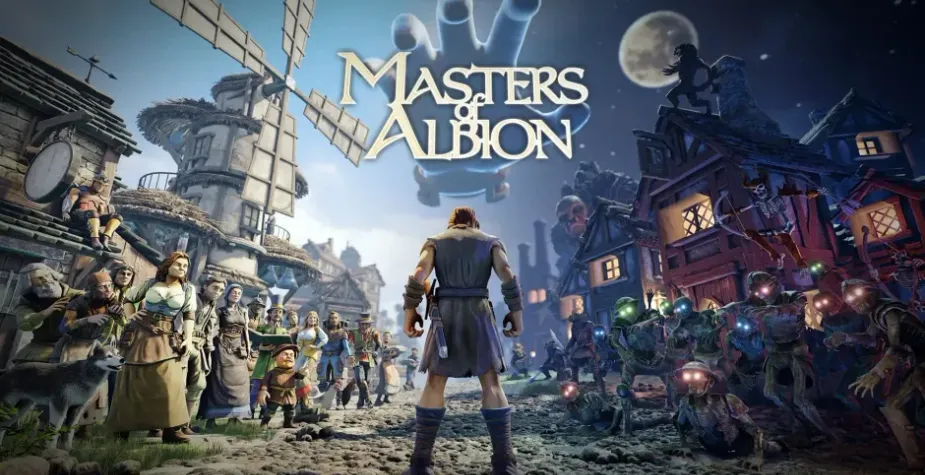
Masters of Albion is a god game, a strategy game that lets you play as a god. The game was developed by 22cans, a studio founded by Peter Molyneux, who is considered the “father” of games such as Fable, Black & White, and Dungeon Keeper. Right now, thanks to us, you can download Masters of Albion for free.The Fellowship of the Ring A cozy game by day, a nightmare by night We craft our own weapons and prepare our own meals A tech tree isn’t enough—it’s a whole tech forest! Possession Returns from Dungeon Keeper Nighttime Brings Nightmares Recycling the best things in the world, but what about life simulation? Masters of Albion free download System requirementsIt’s been 10 years since news about Peter Molyneux, 22cans, and their games dominated the pages of computer magazines and crashed website servers. During this time, the studio did release other games, but neither The Trail: Frontier Challenge nor Legacy could boast even a fraction of the popularity of their great predecessors. Gradually, the memory of those good—and those bad—events has faded, and Molyneux himself has ceased to be a polarizing figure. Entire generations of young gamers simply don’t know him, because they never had the chance to play Populous, Dungeon Keeper, Black & White, or Fable, and after all, a tremendous amount of time has passed since the Godus drama. So this is a rather quiet return, following a massive storm that almost no one remembers anymore. But were the right lessons learned after that flood of the millennium? The Fellowship of the Ring Despite everything that happened in the past, many fans of Populous or Dungeon Keeper hoped that Molyneux—if he returned—would finally focus on what he does best instead of giving interviews: god simulator games where we play as a being endowed with omnipotence. All signs point to Masters of Albion being exactly that. To rise to the challenge, however, Molyneux has once again gathered the people with whom he conquered mountains and won the hearts of players in the past. So here we have Mark Healey—the man without whom Dungeon Keeper wouldn’t have been what it was; we have Russell Shaw (composer for DK, Syndicate, Black & White, Fable); there’s also Iain Wright (designer of Black & White 2, Fable 2, and 3); and there’s Kareem Ettouney (Black & White 2, Fable, and incidentally, the man who, together with Mark Healey, founded Media Molecule and gave the world LittleBigPlanet). With such names and such a team at the studio, it was obvious that they piqued my curiosity. I grew up on their games and still return to them regularly to this day. A cozy game by day, a nightmare by night The gameplay in Masters of Albion is divided into two phases—day and night. During the day, it’s a sunny, relatively relaxing experience where you build your town, manage production, explore, and prepare for the coming of night. At night, however, the gameplay turns into a sort of tower defense with action elements, as we’ll have to fend off attacks from various monsters, skeletons, and zombies. The rule is simple, and we’re actually familiar with it from many other titles. The devil, however, is in the details. Building isn’t just about placing one structure after another to fill the next links in the production chain. We will build structures, yes, but from parts; using our “hand of God” (the cursor characteristic of Peter Molyneux’s games), we’ll literally assemble them from blocks (Molyneux has said he loves Lego, which was clearly an inspiration here). There are plenty of blocks, and we’ll constantly be unlocking new ones—this applies to both cosmetic elements, so we can customize the look of our settlement to our taste, and functional elements. A roof, a chimney, a bedroom, a kitchen, production rooms, and many others—all of this allows us to create impressive (or monstrously bizarre) structures. Depending on which blocks we use, we’ll end up with a different building. So, if a building contains, for example, an anvil, we’ll create a workplace for a blacksmith. Interestingly—and this is really cool—we can combine buildings. To explain this with an example: usually in other games, we have two separate buildings—a smelter’s workshop, where ore is prepared, and a blacksmith’s workshop, where weapons are crafted from it—and workers run back and forth between the two. In Masters of Albion, we can combine both buildings and create a Smelter and Blacksmith in one. Heck, instead of building a village consisting of many buildings, we can create one huge megabuilding that combines all functions and creates a smelter-blacksmith-baker-tavern-dormitory. Molyneux cautioned, however, that megabניינים lose efficiency in production, so it’s important to find a happy medium. All this modular building looks—I’ll admit—great and truly gives the player the ability to create beautiful, strange fantasy settlements. Every single one of your buildings can look different—even if you have two bakeries, you can build them differently. It amused me—though it’s the spirit of capitalism, and I hope our CEO doesn’t read this announcement—when it turned out that we can… put a bedroom inside a production building. You know, so that the employee doesn’t have to go home after work and waste time. We craft our own weapons and prepare our own meals Once we’ve cobbled together our fantastic buildings into some sort of ramshackle whole, we still have to decide what will actually be produced in them. A blacksmith won’t do anything unless we give him an order for a sword. So all the tools and dishes the kitchen treats us to will also be assembled from blocks. So, we’ll design a sword from the pommel, through the guard, all the way to the tip. Each of these parts has its own stats and will affect the final result accordingly—each also has its own price, and it might not be worth using the most expensive parts. Especially since the game… has an economy. We don’t yet fully know how it’s supposed to work, but we know it’s meant to fluctuate and regulate the profitability of production. Interestingly, specific item blocks are designated by rarity colors—just like in WoW or Diablo. The same applies to food—we can create a delicious muffin, but we can also add a dead rat to our dish instead of fresh meat. There are supposed to be plenty of possibilities, and this is meant to be a fun diversion; however, Molyneux notes that if someone doesn’t want to spend hours on this process, it will be possible to quickly assemble an item. Of course, we’ll be rewarded for well-crafted item/dish designs, and the entire economy is based on money. We’ll use that money to unlock further elements of various tech trees. Once we’ve crafted a dish or weapon, production will begin, and our hero—because in addition to the villagers, we also have heroes who patrol our lands and fight monsters, just like in Majesty—will set out to purchase new gear. Heroes act independently—just like the villagers, and the dishes and items we design will be used by both heroes and ordinary villagers. Like in many of Molyneux’s past games, we play as a god-like entity, so instead of directly controlling them, we influence the decisions of our subjects. We can, of course, assign a hero or villager to a specific task (by picking them up and dropping them nearby, as in Dungeon Keeper), but we don’t control them as in a strategy game by right-clicking. A tech tree isn’t enough—it’s a whole tech forest! The money we earn—among other things, by fulfilling orders for specific items (meals, weapons)—will be used to unlock more items, mechanics, and bonuses in the tech trees, and there are a ton of them. Molyneux, presenting the trees, said: “I LOVE TECH TREES.” And indeed, that love is plain to see. We have four major tech trees to unlock—Peoples, Lords, Royal, and Mystic—each of which will allow us to develop various regions of our kingdom; so we have skills that unlock new buildings and production chains, new mechanics and professions, we have passive bonuses for production or combat, we can unlock defensive building blocks (ballistas, trebuchets), and we’ll also learn new spells (because we’re gods, so we have to hurl lightning bolts). We’ll unlock the Mystic Tree (with spells) differently, without using money, but by spending “Mystic Favors” —favors we earn at night by killing monsters. There weren’t that many spells in the tree, and I hope they’ll add more during early access—personally, as a Populous fan, I’m hoping for the ability to create a volcano. Additionally, completing requests for residents fills a progress bar, which also unlocks passive bonuses—such as increased sales profits. Heroes also have their own skill tree—so there’s definitely plenty to do and ways to progress as the game develops. Possession Returns from Dungeon Keeper One of the standout features of the 1997 Dungeon Keeper was the Possession spell. In this game, built on the Magic Carpet engine, we viewed our dungeon from above, building, digging, and managing operations. But by using the Possession spell, we could take control of our independent, sullen creature. At that point, the perspective and genre of the game shifted—instead of strategy, we played in first-person and could charge into battle, casting spells and swinging a sword. We get exactly the same signature mechanics from Molyneux in Masters of Albion. So we can take control of any inhabitant, but also a chicken or a dog. If, on the other hand, we take control of a hero, we can begin exploring. The titular “Fable-esque” Albion is an island divided into regions. Initially, of course, only one region is active—the one where our main village stands. The rest is shrouded in the fog of war, and our divine powers don’t work in those areas—so we can’t build or move residents there. That’s when exploration comes in handy. Controlling a third-person character, much like in Fable, we set off into territories outside our jurisdiction in search of adventure. I say “much like in Fable,” and it does indeed remind me of the first Fable. Especially since this aspect of the game—and combat in particular—still needs a lot of polishing, in my humble opinion. During our exploration, we’ll encounter bandits, find treasure chests, solve puzzles, destroy gargoyles that serve as collectibles (just like in Fable), and even explore accessible dungeons filled with monsters and treasures. With its help, we’ll also unlock a new region for expansion—this is done by solving a puzzle related to a lantern—the one I saw was simple; all I had to do was build a tower out of blocks using the “drag and drop” method. Unlocking new regions will, of course, bring us further benefits: blocks for building both structures and goods/food, new characters, cosmetic skins, and, of course, money. The game has a bit of a storyline, but it’s conveyed through talking portraits—Molyneux, as he noted, isn’t a fan of the modern use of cutscenes, which pull the player away from the game. I wouldn’t expect particularly moving stories here; that’s not what his games have typically been about. In Masters of Albion, we’ll of course be able to play as “the good guy” or “the bad guy”—I’m not entirely sure yet what specific changes this will bring, but I know we’ll be able to put people in stocks, hang them, and the background music will change accordingly. If you play as the bad guy, it’ll be gloomy and dark; if you play as the good guy, it’ll be lively and cheerful. Nighttime Brings Nightmares Once we’ve completed all the tasks we wanted or needed to do during the day, we can click a special icon to transition to nighttime. Molyneux emphasized, however, that it’s worth preparing for this—before nightfall, we can check (as in tower defense) which direction the enemies will come from and, using the same modular “drag-and-drop” method, — build a ballista tower (there are 4 types of towers in the game; they’re extremely expensive but effective, and they consume ammunition). We can also check what new enemies will attack us or fortify ourselves with walls. Enemies will try to attack the Crypt—a building in our town (like the Heart of the Dungeon in Dungeon Keeper)—and we must defend it at all costs. At night, we can of course possess our hero and throw ourselves into battle personally, but from a strategic standpoint (enemies attack from several locations), it’s probably better to observe the situation from above. If our heroes and defensive towers can’t handle the task, we can use spells (by the way, when we cast lightning bolts, the fingers of our god-like hand form the sign of the horns) or pick up a boulder and drop it on a nasty zombie’s head. Recycling the best things in the world, but what about life simulation? This entire game has been cobbled together from elements that Molyneux and his team created long ago—managing the inhabitants and the Possession spell resemble Dungeon Keeper (or an inverted Dungeon Keeper, if only because we’re on the surface, but – as Molyneux pointed out – the world isn’t just vast on the surface; the underground is also enormous, and we’re meant to find plenty of adventures there; so I’m hoping for more nods to Keeper), spellcasting is Populous, and the division into the light and dark sides of the Force is straight out of Black & White. The exploration, meanwhile, is pure Fable. Almost every element brings to mind one of Bullfrog’s or Lionhead’s games, which will be a nice bonus for fans and a trip down memory lane. When Molyneux picked up a boulder and hurled it at an enemy, I felt like installing Lionhead Studios’ debut title. And that makes me very happy, because first of all, a lot of time has passed since those games, and they haven’t received any remasters or remakes, and secondly—that’s exactly what they were famous for. That’s what Molyneux did best, and that’s what built his career. Let me repeat the main point from the beginning of this text—if you’re hoping for a grand drama, I don’t see it here. Masters of Albion, while interesting, doesn’t have the same ambitions as Black & White or Fable—it’s simply a base/city builder with exploration and tower defense-style defense elements. It’s just a fun little game, not a masterpiece that will change your life. And this more intimate nature suits this kind of genre—it’s simply a promising indie game. Which doesn’t mean I don’t have my concerns—the combat I mentioned didn’t make the best impression on me. I also don’t know how the life simulation works in this game. I haven’t been able to figure out if the residents of our town lead any kind of private lives, if they do anything other than work, or if they pair up and spend their free time however they like. It’s a god simulator, so I expect those elements to be in the game—but for now, nothing is known about them. Masters of Albion aims to be a top-notch god simulator. That’s all there is to it—and that’s more than enough. It’s a promising-looking game where you’ll do a bit of building, play designer for a while, and explore forests, meadows, mountains, and vast underground realms. For fans who can’t get over the loss of Bullfrog Productions and Lionhead Studios—and those who also miss Majesty—this is a must-play. I don’t think this god will lead us to salvation, but maybe he’ll let us spend a dozen or so hours in an immersive, beautiful, and mysterious fantasy realm. See for yourself today by downloading Masters of Albion for free. Masters of Albion free download Click the button below to feel divine by downloading Masters of Albion completely free.Here is the link to purchase the game: Masters of AlbionGenre: Strategy gamesSupported languages: ES/ENG/MULTiSystem requirements Minimum:OS: Windows® 10 (64-bit)Processor: Intel® Core™ i5-4670 (quad-core) / AMD® FX-Series™ FX-4350 (quad-core)Memory: 8 GB RAMGraphics: NVIDIA® GeForce® GTX 1050 (2 GB) / AMD® Radeon™ RX-460 (4 GB) / Intel® Arc™ A380 (6 GB)DirectX: Version 12Storage: 10 GB available spaceRecommended:OS: Windows® 10 (64-bit)Processor: Intel® Core™ i5-7600 (quad-core) / AMD® Ryzen™ 3 2200G (quad-core)Memory: 16 GB RAMGraphics: NVIDIA® GeForce® GTX 1060 (6 GB) / AMD® Radeon™ RX 580 (8 GB) / Intel® Arc™ A580 (8 GB)DirectX: Version 12Storage: 10 GB available space
- Henry Beaumont
- 2025/10/29
Europa Universalis 5 free download PC
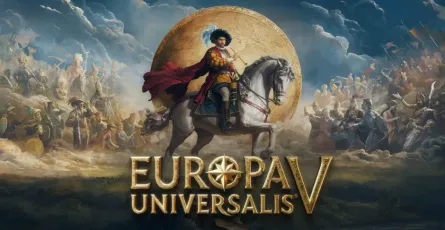
History is not just a record of facts; it is a collection of decisions, ambitions and risky choices and their irreversible consequences. The latest instalment of the Europa Universalis series from Paradox Interactive transports players to pivotal moments in human history. Europa Universalis V is a game that could set a new standard for strategy titles, combining in-depth political, military and economic simulations with unparalleled freedom to conduct global operations. Take a look at the detailed game information – we hope it will encourage you to download Europa Universalis V for free.Populations, cultures, and religions Diplomacy and politics Building economic power A new approach to conflict When is Europa Universalis V coming out? How to download Europa Universalis 5 for free? Europa Universalis 5 system requirementsPopulations, cultures, and religions Europa Universalis V introduces a whole new level of quality in terms of managing societies in strategy games. The game features an advanced population system that considers ethnic, religious, and social diversity within each country. Players must manage diverse ethnic and religious groups and resolve the conflicts and tensions that may arise within states, particularly in places with complex demographic structures. This system completely changes the way we approach state management. Players must now consider that decisions such as changes in integration policy, religious tolerance levels, and investment in education and culture can have far-reaching consequences for societal stability. For instance, neglecting ethnic or religious minorities could result in rebellion, mass migration, or the destabilisation of an entire region. The game forces players to consider every detail of domestic policy in a realistic and thoughtful way. Not only does this system add depth to the gameplay, it also presents players with new challenges that can alter the course of history, whether through relative tolerance, forced assimilation or social revolutions. Diplomacy and politics In Europa Universalis 5, diplomacy has reached a whole new level of sophistication. It is no longer just about forming alliances and waging war. Players must now also manage internal factions with their own interests and ambitions. The nobility, clergy, townspeople and educated upper classes all have their own demands that can significantly affect the stability of the government. This makes governing a country a more demanding and nuanced task. In this instalment, diplomacy involves more than just seeking alliances or treaties. New political tools are available, such as subtly influencing the decisions of other countries, blackmailing them on strategic issues, and using secret diplomatic missions to destabilise the enemy from within. The aim is not only to dominate Europe, but also to maintain internal order, balance the interests of different social groups and respond to changing international conditions. Additionally, the new system enables players to interact more dynamically with countries that have different political systems, thereby changing the traditional approach to diplomacy. Players must consider not only the strength and internal mood of their own country, but also that of neighbouring countries. Building economic power The economy in Europa Universalis 5 offers a brand new experience with a focus on realism and accuracy. Players can now deeply manage their country's economy, deciding on production levels, infrastructure investments and the development of international trade relations. The game takes traditional trade into account and introduces new mechanics related to the construction and development of markets, industries and goods production. Effective resource management is crucial for the success of the state. Depending on the region and the resources available, players must make strategic decisions about where to invest, how to develop agricultural or industrial production and how to exploit their domestic markets' potential. The trading system enables more intricate interactions with other countries, giving players the chance to control global trade routes and leverage them to attain their political and economic objectives. Investments in technology, market development and infrastructure become fundamental to a country's development. Neglecting these can lead to economic stagnation, whereas wise decisions can enable players to dominate the world stage. A new approach to conflict In Europa Universalis V, war is not just a military affair; it is also a matter of logistics, strategy and predicting your opponent's actions. The game expands the military system by introducing more detailed mechanics for supplies, unit morale and combat capabilities. Players must now plan not only battles, but also war campaigns that take into account variable conditions such as terrain, weather and resources. New systems, such as supply lines, enable realistic war strategies. Rash decisions, such as attacking unprepared troops in difficult terrain, can lead to disastrous results, including the complete collapse of the front line. Additionally, the morale mechanics and the way army morale changes during campaigns mean that players must constantly monitor the state of their troops and adapt their strategies to the situation on the battlefield. When is Europa Universalis V coming out? You won't have to wait long. It is due to be released for PC on 4 November 2025. The game will cost $59.99 (£49.99 or €59.99). However, you can download the game for free here, so take advantage of this unique opportunity! Download Europa Universalis 5 for free using the button below. Rewrite history!Here is the link to purchase the game: Europa Universalis 5Genre: Strategy gamesSupported languages: ES/ENG/MULTiEuropa Universalis 5 system requirements Minimum:OS: Windows® 10 Home 64 BitProcessor: Intel® Core™ i7-8700K | AMD® Ryzen™ 5 3600Memory: 16 GB RAMGraphics: Nvidia® GeForce™ GTX 1060 (6GB) | AMD® Radeon™ RX 580 (8GB)Recommended:OS: Windows® 11Processor: Intel® Core™ i7-14700K | AMD® Ryzen™ 7 7800X3DMemory: 32 GB RAMGraphics: Nvidia® GeForce™ RTX 3060 Ti (8GB) | AMD® Radeon™ RX 6700 XT (12 GB)
- Henry Beaumont
- 2025/10/12
Farthest Frontier download for free
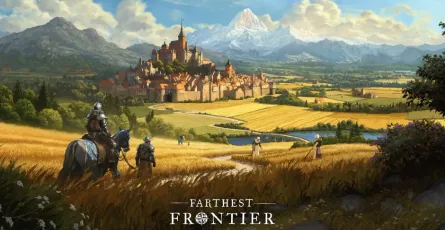
Farthest Frontier is a strategy game developed and published by Crate Entertainment, the creators of Grim Dawn. The game was first made available on PC as part of the Early Access programme. This article contains a link to download Farthest Frontier for free.Gameplay basics Be prepared for unforeseen circumstances, such as disasters and attacks! Farthest Frontier – Update 1.0 Content This gives us greater freedom of action Further development of the game How to download Farthest Frontier for free? Farthest Frontier system requirementsThis time, the developers of the popular hack-and-slash game have tried their hand at a different genre. The result is a game that combines survival with medieval city-building. Gameplay basics In Farthest Frontier, players must lead a group of settlers and establish a settlement for them on the edge of the world, which will eventually evolve into a functioning medieval city. Gameplay involves many components, such as mining resources, constructing buildings, managing an extensive agricultural system, inventing new technologies and taking care of the inhabitants' needs. Efficient city management involves not only erecting new buildings, but also skilfully expanding the transport network, and ensuring that deer do not feast on crops in nearby fields and bears do not raid food warehouses. Be prepared for unforeseen circumstances, such as disasters and attacks! The developers have also included various random elements to make the gameplay more diverse. As was often the case in the Middle Ages, our residents may occasionally fall ill with diseases such as scurvy. To avoid this, ensure your residents have a proper diet, supplemented with vegetables and fruit gathered in the nearby forest. Meanwhile, it is also worth hiring rat catchers to get rid of persistent rodents that could bring the plague to our settlement. In Farthest Frontier, it will be necessary to build palisades and, over time, walls to protect our possessions from invaders. However, for those who prefer to develop their settlement peacefully, there is a pacifist mode in which enemies will not attack. Farthest Frontier – Update 1.0 Content In a lengthy post, Crate explains that they added a lot of content for the early access finale of the strategy game and now need to thoroughly test the new features. Importantly, even though the official release of the game is in autumn, open testing of patch 1.0 begins in mid-July. During this time, the studio intends to make significant improvements based on community feedback and put the finishing touches to the game. What can we expect? First and foremost, there will be a thorough change to the rules of settlement development. Earlier, Crate announced that it was preparing an extensive technology tree. Initially, it was supposed to branch out into 70 nodes. However, the developers were ultimately not satisfied with the results, so they rebuilt the system and expanded it to include 105 nodes. At the same time, responsibility for access to building upgrades was removed from the City Centre and included in the aforementioned tree. This gives us greater freedom of action This means that we will have much more freedom to develop and specialise in selected branches of production or industry. At the same time, clear advantages in development or combat have been moved to further nodes so that the whole system is much more engaging. In other words, it is no longer enough to pour all your resources into upgrading the City Centre as quickly as possible because individual upgrades will form part of a larger strategy. The tech tree will also feature monuments that symbolise the city's development. In the new system, however, you will have the opportunity to build them all. Previously, the game forced players to focus their efforts on gaining access to only one monument. As well as buildings, the tree will feature nodes related to access to decrees. These will allow players to influence residents to pursue desired development and production of goods. Further development of the game Finally, here is an important note from the same post. Crate suggests that it already has plans for the post-release development of Farthest Frontier. This includes extensive updates and paid additional content packs. Although there are no specifics yet, the developers have already presented some ideas. Specifically, bridges, which are clearly in demand from players. These will not be included in the 1.0 update, but will definitely be added to the game at a later date. Want to play this game for free? Click below to download Farthest Frontier for free.Here is the link to purchase the game: Farthest FrontierGenre: Strategy gamesSupported languages: ES/ENG/MULTiFarthest Frontier system requirements Minimum:OS: Windows 10 (64bit versions only)Processor: Processor: Intel Core i5 3470 @ 3.2 GHz | AMD FX 8120 @ 3.9 GHzMemory: 8 GB RAMGraphics: NVIDIA GeForce GTX 780 | AMD R9 290, with 3 GB VRAM or betterDirectX: Version 11Storage: 4 GB available spaceRecommended:OS: Windows 10 (64bit versions only)Processor: Processor: Intel Core i5 4690 @ 3.5 GHz | AMD Ryzen 5 1600x @ 3.6 GHzMemory: 16 GB RAMGraphics: NVIDIA GeForce GTX 980 | AMD RX 590, with 4GB VRAM or betterDirectX: Version 12Storage: 4 GB available space
- Henry Beaumont
- 2025/07/08
Stronghold Crusader: Definitive Edition free download
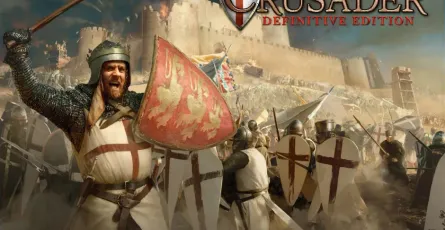
When Firefly Studios announced the release of Stronghold: Definitive Edition, it was clear that if the new version was a hit, we could also expect the return of Crusader. Here, you can download Stronghold Crusader: Definitive Edition for free — a classic game with a new twist.More and prettier! New and improved units and lords Create your own missions A few minor changes Stronghold Crusader: Definitive Edition system requirementsThe previous version, available on Steam or GOG, offers plenty of content. It includes 80 scenarios in two pseudo-campaigns and a dozen missions based on historical battles. It also has a great template-based map generator and map editor, as well as multiplayer. The package also includes the Extreme Edition, which features hardcore scenarios and boards that allow battles with thousands of units. So why the remaster? More and prettier! First of all, Stronghold Crusader: Definitive Edition comes to the rescue, primarily in terms of graphics. The old graphics are still charming, but once you see the refreshed textures, you won't be able to comfortably go back to the original. Second, it aims to improve the multiplayer experience with a standard matchmaking system and a convenient option to play with friends instead of outdated solutions or antiquated external programs, such as Hamachi. The third point seems to be the most important. Rarely does the release of old games add anything more than maps. Firefly has gone above and beyond, though, because the game will be enriched with eight new units, including a Bedouin scout, a camel lancer, an armored camel, and a wall breaker. _v5RSM New and improved units and lords As we know, the Bedouins were well adapted to life in the desert. The developers of the revamped Crusader emphasized this with their equipment. We have skilled sappers, troops who specialize in setting traps, eunuchs who wield two scimitars each, and irreplaceable healers on the battlefield. However, Stronghold Crusader: Definitive Edition has to offer. Firefly has also introduced new AI-controlled enemies. The developers emphasize that each character has been designed to embody the military and cultural aspects of the ancient world properly. Create your own missions The game's roadmap includes two main categories of new content: free content released as part of standard updates and paid content. The first category includes a new economic campaign with five missions centered on disrupted water trade routes on the Nile, which will be available in the fall. There will also be a new ruler with whom we can compete. In the winter, a series of ten missions for cooperative mode will debut, along with the ability to modify castles, rulers, and campaigns. Special tools will be created for this purpose that will also allow you to design rulers and their strongholds from scratch for your own hand-designed missions. A few minor changes As for the familiar elements of the game, the most notable change is the significantly altered appearance of the knights and soldiers. Their tunics and horse caparisons are now less white, and the crosses no longer span the entire height and width of the shields or horse coverings. Firefly Studios wouldn't be Firefly Studios if they didn't boast about the game's popularity on Steam. As many as 150,000 players added the Crusader re-release to their wish lists, and 130,000 downloaded the demo. These are great results for a remaster of an almost 25-year-old RTS game. Stronghold Crusader: Definitive Edition will debut on PC on July 15. Download Stronghold Crusader: Definitive Edition for free by clicking the button below.Stronghold Crusader: Definitive Edition system requirements Minimum:Requires a 64-bit processor and operating systemOS: Windows 10/11 64 BitProcessor: Intel® Core™ i3-6100 or equivalent (Arm processors are not supported)Memory: 8 GB RAMGraphics: Graphics Card with 2GB VRAM (for 1080p) or 3GB VRAM (for 1440p) or 4GB VRAM (for 4k)DirectX: Version 11Network: Broadband Internet connectionStorage: 7 GB available space
- Henry Beaumont
- 2025/06/20
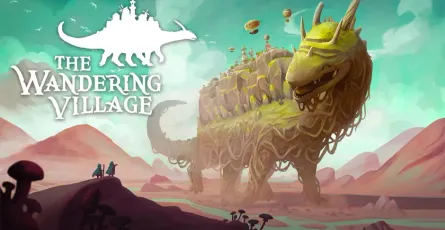
The Wandering Village for free
Set in a world plagued by toxic germs and countless threats, The Wandering Village distinguishes itself from other city-building simulators with its unique strategic approach. Developed by Stray Fawn Studio, this unique game combines city building and resource management with the care of a giant, wandering creature named Onbu. We are offering you the opportunity to download The Wandering Village for free.Soothing post-apocalypse There is no combat in this game Extensive gameplay mechanics It is a musical and graphical gem The Wandering Village system requirementsSoothing post-apocalypse In The Wandering Village, players must create and maintain a settlement on the back of Onbu, a giant, six-legged creature roaming a planet poisoned by toxic spores. Inspiration from Hayao Miyazaki's films, especially Nausicaä of the Valley of the Wind, is evident in both the game's visuals and its profound message about symbiosis with nature and the challenges posed by a new world full of dangers. The game starts off in a standard way, as with most city-building simulators, with players gathering resources and building shelters and other necessary buildings. However, it quickly reveals its uniqueness: as well as managing the settlement, players must also take care of Onbu, whose health and trust are crucial for the survival of the community. The mechanics of building trust and interacting with Onbu bring a warmth and depth to the game rarely found in other titles of this genre. Despite being overwhelming at first, the game's intuitive user interface quickly becomes clear and easy to navigate. Initially, managing the settlers' work and redirecting them to various tasks is straightforward, but after a few hours of play, some minor issues arise. There is no combat in this game Apart from ensuring the sustainability of the settlement, the game does not present any threats from indigenous peoples, other wandering Onbu or predators. The only threats are toxic rain and a new group of settlers, half of whom will be sick. Once we have developed and planned new buildings, we are faced with the task of ensuring that each settler is occupied. Unfortunately, we cannot manage individual units here; at most, we can set priorities for each activity. This is where the problems begin. We do not know which settler will arrive at the assigned work and when, and the lack of even one resource can extend the waiting time by up to several minutes. Extensive gameplay mechanics The research system is also important, as it enables you to develop the necessary technologies to maintain the health and efficiency of settlers and Onbu. Players can personalise their experience by adjusting the difficulty level, including the option to disable Onbu or resident deaths. However, more advanced players may prefer a higher difficulty level, and to unlock this, they must complete the game at the 'novice' level. However, The Wandering Village is not just about management and construction. It forces you to constantly adapt to changing biomes and threats, adding dynamism and unpredictability to early gameplay. You must balance the needs of the settlement with the health and well-being of the Onbu, introducing elements of strategic depth. Feeding, healing and petting this gentle giant makes The Wandering Village more than just a city-building simulator. It tells the story of symbiosis and interdependence, and of how the balance between nature and civilisation can determine survival. It is a musical and graphical gem Visually, The Wandering Village delights with its beautiful, hand-drawn graphics and buildings that are full of detail and fit into the consistent aesthetics of the entire settlement. The inhabitants' animation is charming, although it stands out slightly from the buildings and plants growing on Onbu's back. The music, featuring traditional instruments and a beautiful choir, blends seamlessly with the game's visuals and themes, creating a rich, immersive atmosphere. It is also noteworthy that you can zoom in and out of the map, from a full view of Onbu's wandering path to a close-up of his body to issue commands and an isometric view of our village. Compared to other games in this genre, The Wandering Village not only stands out for its original concept and beautiful graphics, but also for the emotional depth introduced by the relationship with Onbu. While many games focus on cold calculation and resource management, here caring for your giant, wandering partner is just as important. Click the button below to download and install The Wandering Village for free.The Wandering Village system requirements Minimum:OS: Windows® 7, Windows® 10Processor: Quad Core ProcessorMemory: 4 GB RAMGraphics: GeForce GTX 660, Radeon RX 460 or similar dedicated graphics cardDirectX: Version 11Storage: 2 GB available spaceRecommended:OS: Windows® 10Processor: Quad Core ProcessorMemory: 8 GB RAMGraphics: GeForce RTX 2070, Radeon RX 5700 or similar dedicated graphics cardDirectX: Version 11Storage: 2 GB available space

- Henry Beaumont
- 2025/06/05
Broken Arrow PC download for free
Broken Arrow is a real-time strategy (RTS) game depicting a fictional conflict between the United States and Russia in the modern world. Its gameplay style is similar to that of World in Conflict or Wargame, featuring large-scale clashes with modern weaponry. Steel Balalaika Studio developed this game. Slitherine is the publisher. Only with us you can download the game Broken Arrow for free.Gameplay Unique army building Game modes How to download Broken Arrow for free? Broken Arrow system requirementsGameplay In Broken Arrow, the action can be observed from various perspectives, ranging from a distant bird's-eye view to close-ups of individual units. Players control troops and take part in major clashes between armies using modern equipment. Players can lead one of two factions — the US or Russia — and use several hundred units divided into six categories: reconnaissance, infantry, combat vehicles, support, helicopters, and air force. Unique army building Some battles are won through good planning. Create a combination of units and weapons that suits your style of play to surprise and defeat the enemy. The number of possibilities is enormous, ensuring that each battle is different from the last. Broken Arrow has a wide range of units divided into six categories: Broken Arrow system requirements Minimum:Requires a 64-bit processor and operating systemOS: Windows 10 64bitsProcessor: Quad core compatible 64bitsMemory: 8 GB RAMGraphics: GTX 1050 3GB / RX 560Storage: 60 GB available spaceRecommended:Requires a 64-bit processor and operating systemOS: Windows 10 64bitsProcessor: Quad+ core compatible 64 bitsMemory: 16 GB RAMGraphics: GTX 2080 8GB / RX 6800 XTStorage: 60 GB available space