-
 Henry Beaumont
 - 2026/07/13
Beast of Reincarnation free download
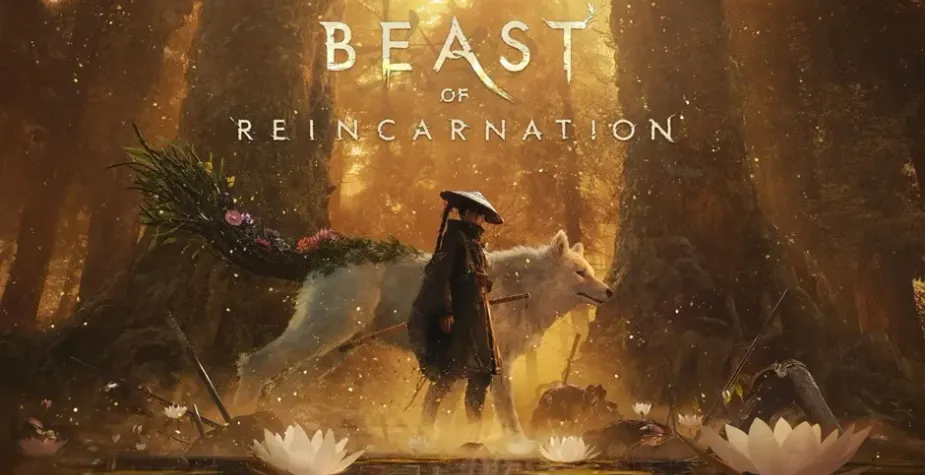
Beast of Reincarnation transports us to a post-apocalyptic Japan, where we take control of the warrior Emma and her canine companion Koo, and face off against the creatures spreading pollution across the land. Download Beast of Reincarnation for free now! A third-person action RPG from Game Freak, the studio known for the Pokémon series.Plot An advanced combat and world exploration system Kota Furushima is in charge of the script Free download of Beast of Reincarnation System RequirementsThis title, which is already shaping up to be one of the top contenders to become this summer’s hit, will be released on August 4, 2026. The game will launch simultaneously on PC, PlayStation 5, and Xbox Series X/S. Important news for Microsoft subscribers: the game will be available on Xbox Game Pass from day one, and traditional physical editions will also be released. Plot The highly regarded and popular Yui Ishikawa will play the lead role of Emma. The game’s director, Kota Furushima, explained in an interview that the story will focus on the trials and tribulations of a young woman suffering from amnesia and a complete lack of emotions, as well as her unusual companion: a dog named Koo. The plot of “Beast of Reincarnation” tells the story of Emma, an exiled heroine who, alongside her wolf companion Koo, travels through a devastated world dominated by parasitic plants known as “the blight.” A biological catastrophe has led to the near-total collapse of humanity, and the few survivors live in the shadow of powerful creatures and a contaminated natural world that continues to spread. Emma stands out among the other survivors because of an exceptional ability: she is capable of hunting monsters called “Malefacts” and sealing their “plague” within her own body. It is precisely this ability that makes her the only person capable of facing the greatest threat in the game world: the Beast of Reincarnation, which gives the game its title. To get closer to it, the protagonist, along with Koo, must defeat powerful adversaries known as Nushi and claim their powers. An Advanced Combat and World Exploration System At the heart of the gameplay is a dynamic combat system based on close collaboration between Emma and Koo. Their abilities are directly linked: when Emma successfully blocks attacks, the wolf’s energy level increases, allowing her to activate powerful offensive techniques called “Blooming Arts.” This mechanic is designed to reward precision, good timing, and conscious risk management in battles against increasingly dangerous enemies. Added to this are three difficulty levels: the standard “Normal,” the challenging “Hard,” and “Story Mode” for those who want to focus on the plot; in the latter, the time to dodge is more generous and enemies deal less damage. The system is further expanded with equipment and customization options: in combat, you can use items called “Spirit Stones,” which provide various effects depending on your actions during battles. During exploration, you’ll also find new katanas for Emma and amulets for Koo; both types of equipment have their own specialized bonuses, so the game encourages you to create your own combat style, rather than playing with “a single correct setup.” The developers place a strong emphasis on the “rhythm” of the gameplay. You can open Koo’s command menu at any time, and when you select abilities, combat slows down: you have a moment to assess the situation, plan your next move, and return to the fight with a clear head. It’s a deliberate balance between fast-paced action and tactical thinking—not a game that relies solely on split-second reactions. Kota Furushima is in charge of the script The design is led by Kota Furushima, the game’s director and screenwriter, who previously worked on the “Pokémon” series as a battle planner and sound director. The creator emphasizes that he had long dreamed of creating a completely new experience, distinct from the studio’s existing franchises. As he himself has admitted, the starting point was the question of what emotions the game should evoke in the player. The closest answer turned out to be a mix of “warmth, trust, and loneliness”—feelings that should permeate both the narrative and the exploration of the world itself. Furushima also noted that, over the course of six years of development, the team has been systematically building the game’s world, filling it with secrets and details that players will gradually uncover. Therefore, “Beast of Reincarnation” is neither a short-term project nor a side project, but a full-fledged AAA title set in a new universe. It’s worth noting that the game was previously known by the working title “Project Bloom” and was originally slated to be published by Private Division, a label owned by Take-Two Interactive. Following the sale of that label in 2024, the project changed publishers; ultimately, the new company Fictions will handle its publication. For Game Freak, this marks a new phase in the rollout of its internal “Gear Project” initiative, launched a decade ago. This program allows the studio’s developers to propose their own ideas during periods of reduced commitment to the Pokémon series games. In the past, this has led to more modest but original productions, such as HarmoKnight or Tembo the Badass Elephant. However, Beast of Reincarnation is undoubtedly the most ambitious project created under this philosophy. Free Download of Beast of Reincarnation Click the button below to start downloading the game Beast of Reincarnation completely free.Here’s the link to purchase the game: Beast of Reincarnation Category: RPG Supported languages: ENG/MULTiSystem Requirements Minimum:OS: Windows® 11 (64-bit) Processor: Intel® Core™ i5-4670 (quad-core) / AMD® FX-Series™ FX-4350 (quad-core) Memory: 8 GB of RAM Graphics: NVIDIA® GeForce® GTX 1050 (2 GB) / AMD® Radeon™ RX-460 (4 GB) / Intel® Arc™ A380 (6 GB) DirectX: Version 12 Storage: 30 GB of available spaceRecommended:OS: Windows® 11 (64-bit) Processor: Intel® Core™ i5-7600 (quad-core) / AMD® Ryzen™ 3 2200G (quad-core) Memory: 16 GB of RAM Graphics: NVIDIA® GeForce® GTX 1060 (6 GB) / AMD® Radeon™ RX 580 (8 GB) / Intel® Arc™ A580 (8 GB) DirectX: Version 12 Storage: 30 GB of available space
- Henry Beaumont
- 2026/03/29
Masters of Albion download for free
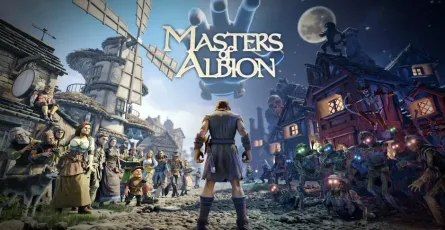
Masters of Albion is a god game, a strategy game that lets you play as a god. The game was developed by 22cans, a studio founded by Peter Molyneux, who is considered the “father” of games such as Fable, Black & White, and Dungeon Keeper. Right now, thanks to us, you can download Masters of Albion for free.The Fellowship of the Ring A cozy game by day, a nightmare by night We craft our own weapons and prepare our own meals A tech tree isn’t enough—it’s a whole tech forest! Possession Returns from Dungeon Keeper Nighttime Brings Nightmares Recycling the best things in the world, but what about life simulation? Masters of Albion free download System requirementsIt’s been 10 years since news about Peter Molyneux, 22cans, and their games dominated the pages of computer magazines and crashed website servers. During this time, the studio did release other games, but neither The Trail: Frontier Challenge nor Legacy could boast even a fraction of the popularity of their great predecessors. Gradually, the memory of those good—and those bad—events has faded, and Molyneux himself has ceased to be a polarizing figure. Entire generations of young gamers simply don’t know him, because they never had the chance to play Populous, Dungeon Keeper, Black & White, or Fable, and after all, a tremendous amount of time has passed since the Godus drama. So this is a rather quiet return, following a massive storm that almost no one remembers anymore. But were the right lessons learned after that flood of the millennium? The Fellowship of the Ring Despite everything that happened in the past, many fans of Populous or Dungeon Keeper hoped that Molyneux—if he returned—would finally focus on what he does best instead of giving interviews: god simulator games where we play as a being endowed with omnipotence. All signs point to Masters of Albion being exactly that. To rise to the challenge, however, Molyneux has once again gathered the people with whom he conquered mountains and won the hearts of players in the past. So here we have Mark Healey—the man without whom Dungeon Keeper wouldn’t have been what it was; we have Russell Shaw (composer for DK, Syndicate, Black & White, Fable); there’s also Iain Wright (designer of Black & White 2, Fable 2, and 3); and there’s Kareem Ettouney (Black & White 2, Fable, and incidentally, the man who, together with Mark Healey, founded Media Molecule and gave the world LittleBigPlanet). With such names and such a team at the studio, it was obvious that they piqued my curiosity. I grew up on their games and still return to them regularly to this day. A cozy game by day, a nightmare by night The gameplay in Masters of Albion is divided into two phases—day and night. During the day, it’s a sunny, relatively relaxing experience where you build your town, manage production, explore, and prepare for the coming of night. At night, however, the gameplay turns into a sort of tower defense with action elements, as we’ll have to fend off attacks from various monsters, skeletons, and zombies. The rule is simple, and we’re actually familiar with it from many other titles. The devil, however, is in the details. Building isn’t just about placing one structure after another to fill the next links in the production chain. We will build structures, yes, but from parts; using our “hand of God” (the cursor characteristic of Peter Molyneux’s games), we’ll literally assemble them from blocks (Molyneux has said he loves Lego, which was clearly an inspiration here). There are plenty of blocks, and we’ll constantly be unlocking new ones—this applies to both cosmetic elements, so we can customize the look of our settlement to our taste, and functional elements. A roof, a chimney, a bedroom, a kitchen, production rooms, and many others—all of this allows us to create impressive (or monstrously bizarre) structures. Depending on which blocks we use, we’ll end up with a different building. So, if a building contains, for example, an anvil, we’ll create a workplace for a blacksmith. Interestingly—and this is really cool—we can combine buildings. To explain this with an example: usually in other games, we have two separate buildings—a smelter’s workshop, where ore is prepared, and a blacksmith’s workshop, where weapons are crafted from it—and workers run back and forth between the two. In Masters of Albion, we can combine both buildings and create a Smelter and Blacksmith in one. Heck, instead of building a village consisting of many buildings, we can create one huge megabuilding that combines all functions and creates a smelter-blacksmith-baker-tavern-dormitory. Molyneux cautioned, however, that megabניינים lose efficiency in production, so it’s important to find a happy medium. All this modular building looks—I’ll admit—great and truly gives the player the ability to create beautiful, strange fantasy settlements. Every single one of your buildings can look different—even if you have two bakeries, you can build them differently. It amused me—though it’s the spirit of capitalism, and I hope our CEO doesn’t read this announcement—when it turned out that we can… put a bedroom inside a production building. You know, so that the employee doesn’t have to go home after work and waste time. We craft our own weapons and prepare our own meals Once we’ve cobbled together our fantastic buildings into some sort of ramshackle whole, we still have to decide what will actually be produced in them. A blacksmith won’t do anything unless we give him an order for a sword. So all the tools and dishes the kitchen treats us to will also be assembled from blocks. So, we’ll design a sword from the pommel, through the guard, all the way to the tip. Each of these parts has its own stats and will affect the final result accordingly—each also has its own price, and it might not be worth using the most expensive parts. Especially since the game… has an economy. We don’t yet fully know how it’s supposed to work, but we know it’s meant to fluctuate and regulate the profitability of production. Interestingly, specific item blocks are designated by rarity colors—just like in WoW or Diablo. The same applies to food—we can create a delicious muffin, but we can also add a dead rat to our dish instead of fresh meat. There are supposed to be plenty of possibilities, and this is meant to be a fun diversion; however, Molyneux notes that if someone doesn’t want to spend hours on this process, it will be possible to quickly assemble an item. Of course, we’ll be rewarded for well-crafted item/dish designs, and the entire economy is based on money. We’ll use that money to unlock further elements of various tech trees. Once we’ve crafted a dish or weapon, production will begin, and our hero—because in addition to the villagers, we also have heroes who patrol our lands and fight monsters, just like in Majesty—will set out to purchase new gear. Heroes act independently—just like the villagers, and the dishes and items we design will be used by both heroes and ordinary villagers. Like in many of Molyneux’s past games, we play as a god-like entity, so instead of directly controlling them, we influence the decisions of our subjects. We can, of course, assign a hero or villager to a specific task (by picking them up and dropping them nearby, as in Dungeon Keeper), but we don’t control them as in a strategy game by right-clicking. A tech tree isn’t enough—it’s a whole tech forest! The money we earn—among other things, by fulfilling orders for specific items (meals, weapons)—will be used to unlock more items, mechanics, and bonuses in the tech trees, and there are a ton of them. Molyneux, presenting the trees, said: “I LOVE TECH TREES.” And indeed, that love is plain to see. We have four major tech trees to unlock—Peoples, Lords, Royal, and Mystic—each of which will allow us to develop various regions of our kingdom; so we have skills that unlock new buildings and production chains, new mechanics and professions, we have passive bonuses for production or combat, we can unlock defensive building blocks (ballistas, trebuchets), and we’ll also learn new spells (because we’re gods, so we have to hurl lightning bolts). We’ll unlock the Mystic Tree (with spells) differently, without using money, but by spending “Mystic Favors” —favors we earn at night by killing monsters. There weren’t that many spells in the tree, and I hope they’ll add more during early access—personally, as a Populous fan, I’m hoping for the ability to create a volcano. Additionally, completing requests for residents fills a progress bar, which also unlocks passive bonuses—such as increased sales profits. Heroes also have their own skill tree—so there’s definitely plenty to do and ways to progress as the game develops. Possession Returns from Dungeon Keeper One of the standout features of the 1997 Dungeon Keeper was the Possession spell. In this game, built on the Magic Carpet engine, we viewed our dungeon from above, building, digging, and managing operations. But by using the Possession spell, we could take control of our independent, sullen creature. At that point, the perspective and genre of the game shifted—instead of strategy, we played in first-person and could charge into battle, casting spells and swinging a sword. We get exactly the same signature mechanics from Molyneux in Masters of Albion. So we can take control of any inhabitant, but also a chicken or a dog. If, on the other hand, we take control of a hero, we can begin exploring. The titular “Fable-esque” Albion is an island divided into regions. Initially, of course, only one region is active—the one where our main village stands. The rest is shrouded in the fog of war, and our divine powers don’t work in those areas—so we can’t build or move residents there. That’s when exploration comes in handy. Controlling a third-person character, much like in Fable, we set off into territories outside our jurisdiction in search of adventure. I say “much like in Fable,” and it does indeed remind me of the first Fable. Especially since this aspect of the game—and combat in particular—still needs a lot of polishing, in my humble opinion. During our exploration, we’ll encounter bandits, find treasure chests, solve puzzles, destroy gargoyles that serve as collectibles (just like in Fable), and even explore accessible dungeons filled with monsters and treasures. With its help, we’ll also unlock a new region for expansion—this is done by solving a puzzle related to a lantern—the one I saw was simple; all I had to do was build a tower out of blocks using the “drag and drop” method. Unlocking new regions will, of course, bring us further benefits: blocks for building both structures and goods/food, new characters, cosmetic skins, and, of course, money. The game has a bit of a storyline, but it’s conveyed through talking portraits—Molyneux, as he noted, isn’t a fan of the modern use of cutscenes, which pull the player away from the game. I wouldn’t expect particularly moving stories here; that’s not what his games have typically been about. In Masters of Albion, we’ll of course be able to play as “the good guy” or “the bad guy”—I’m not entirely sure yet what specific changes this will bring, but I know we’ll be able to put people in stocks, hang them, and the background music will change accordingly. If you play as the bad guy, it’ll be gloomy and dark; if you play as the good guy, it’ll be lively and cheerful. Nighttime Brings Nightmares Once we’ve completed all the tasks we wanted or needed to do during the day, we can click a special icon to transition to nighttime. Molyneux emphasized, however, that it’s worth preparing for this—before nightfall, we can check (as in tower defense) which direction the enemies will come from and, using the same modular “drag-and-drop” method, — build a ballista tower (there are 4 types of towers in the game; they’re extremely expensive but effective, and they consume ammunition). We can also check what new enemies will attack us or fortify ourselves with walls. Enemies will try to attack the Crypt—a building in our town (like the Heart of the Dungeon in Dungeon Keeper)—and we must defend it at all costs. At night, we can of course possess our hero and throw ourselves into battle personally, but from a strategic standpoint (enemies attack from several locations), it’s probably better to observe the situation from above. If our heroes and defensive towers can’t handle the task, we can use spells (by the way, when we cast lightning bolts, the fingers of our god-like hand form the sign of the horns) or pick up a boulder and drop it on a nasty zombie’s head. Recycling the best things in the world, but what about life simulation? This entire game has been cobbled together from elements that Molyneux and his team created long ago—managing the inhabitants and the Possession spell resemble Dungeon Keeper (or an inverted Dungeon Keeper, if only because we’re on the surface, but – as Molyneux pointed out – the world isn’t just vast on the surface; the underground is also enormous, and we’re meant to find plenty of adventures there; so I’m hoping for more nods to Keeper), spellcasting is Populous, and the division into the light and dark sides of the Force is straight out of Black & White. The exploration, meanwhile, is pure Fable. Almost every element brings to mind one of Bullfrog’s or Lionhead’s games, which will be a nice bonus for fans and a trip down memory lane. When Molyneux picked up a boulder and hurled it at an enemy, I felt like installing Lionhead Studios’ debut title. And that makes me very happy, because first of all, a lot of time has passed since those games, and they haven’t received any remasters or remakes, and secondly—that’s exactly what they were famous for. That’s what Molyneux did best, and that’s what built his career. Let me repeat the main point from the beginning of this text—if you’re hoping for a grand drama, I don’t see it here. Masters of Albion, while interesting, doesn’t have the same ambitions as Black & White or Fable—it’s simply a base/city builder with exploration and tower defense-style defense elements. It’s just a fun little game, not a masterpiece that will change your life. And this more intimate nature suits this kind of genre—it’s simply a promising indie game. Which doesn’t mean I don’t have my concerns—the combat I mentioned didn’t make the best impression on me. I also don’t know how the life simulation works in this game. I haven’t been able to figure out if the residents of our town lead any kind of private lives, if they do anything other than work, or if they pair up and spend their free time however they like. It’s a god simulator, so I expect those elements to be in the game—but for now, nothing is known about them. Masters of Albion aims to be a top-notch god simulator. That’s all there is to it—and that’s more than enough. It’s a promising-looking game where you’ll do a bit of building, play designer for a while, and explore forests, meadows, mountains, and vast underground realms. For fans who can’t get over the loss of Bullfrog Productions and Lionhead Studios—and those who also miss Majesty—this is a must-play. I don’t think this god will lead us to salvation, but maybe he’ll let us spend a dozen or so hours in an immersive, beautiful, and mysterious fantasy realm. See for yourself today by downloading Masters of Albion for free. Masters of Albion free download Click the button below to feel divine by downloading Masters of Albion completely free.Here is the link to purchase the game: Masters of AlbionGenre: Strategy gamesSupported languages: ES/ENG/MULTiSystem requirements Minimum:OS: Windows® 10 (64-bit)Processor: Intel® Core™ i5-4670 (quad-core) / AMD® FX-Series™ FX-4350 (quad-core)Memory: 8 GB RAMGraphics: NVIDIA® GeForce® GTX 1050 (2 GB) / AMD® Radeon™ RX-460 (4 GB) / Intel® Arc™ A380 (6 GB)DirectX: Version 12Storage: 10 GB available spaceRecommended:OS: Windows® 10 (64-bit)Processor: Intel® Core™ i5-7600 (quad-core) / AMD® Ryzen™ 3 2200G (quad-core)Memory: 16 GB RAMGraphics: NVIDIA® GeForce® GTX 1060 (6 GB) / AMD® Radeon™ RX 580 (8 GB) / Intel® Arc™ A580 (8 GB)DirectX: Version 12Storage: 10 GB available space

- Henry Beaumont
- 2026/03/24
Samson: A Tyndalston Story for free
This brutal third-person action game is from the Just Cause series veterans and is set in a semi-open modern city. Samson primarily focuses on hand-to-hand combat and spectacular car chases, with the game driven by linear story missions. Do you think you can handle the brutal game world? Download Samson: A Tyndalston Story for free and find out.Set in the '90s Combat and character development Become King of the Road! Jobs Download Samson: A Tyndalston Story for free Samson: A Tyndalston Story system requirementsChristofer Sundberg is one of the founders of Avalanche Studios, which gained fame primarily for the Just Cause series. In 2019, he left the company, founding Liquid Swords the following year. Other veterans from his previous team later joined him, and their debut project was Samson: A Tyndalston Story, a noir action game. Set in the '90s Samson: A Tyndalston Story, tells the story of Samson McCray, who returns to the hostile American town of Tyndalston to confront his past. He's literally in debt to dangerous individuals who are forcing him to repay the loan by exploiting his sister. To save her, the protagonist must do everything in his power to obtain the required sum. Drawing heavily on the atmosphere of iconic action films like Ronin and Heat, the story emphasizes realism, genuine mass of vehicles, and brutality, setting this title apart from its Grand Theft Auto rivals. Combat and character development In Samson: A Tyndalston Story, the action is experienced from a third-person perspective. The game features the titular city, comprised of open-ended districts that can be explored on foot or in vehicles. As befits an action game, players engage in spectacular chases and hand-to-hand combat. In the combat scenes, players encounter the criminals who run the town of Tyndalston and the police who try to maintain order on its streets. The protagonist excels in close combat, eliminating enemies with his fists and kicks or improvised melee weapons, such as gas pipes. As we progress, we accumulate the funds needed to repay the debt and develop Samson. This unlocks various upgrades that increase his chances of success. Become King of the Road! This key element is overseen by Alex Williams, a designer known for his work on Mad Max. This foreshadows a gritty and physical approach to road combat. In the game, cars are more than just a means of transportation; they are true tools in the player's arsenal. Modelled after characters like John McClane from Die Hard, the protagonist must be able to improvise amidst chaos — ramming enemies with his own car will be a regular occurrence. The developers are leveraging the latest Unreal Engine 5.7 and implementing their own unique countersteer system. This system allows players to precisely control skids and drifts while maintaining the feeling of momentum and weight. Every maneuver on the tight streets of Tyndalston is satisfying. Samson's damage system moves away from simplistic energy bars in favor of realistic component destruction. Damage is directly related to the speed and mass of colliding objects, and vehicles are composed of numerous parts that can fail. Players must be prepared for a blown tire, which can drastically reduce traction, or a damaged wheel, which can impede steering and lead to a spectacular high-speed rollover. Each vehicle class, from slow but powerful vans to modified rally cars, requires a different approach and set of driving habits. The Tyndalston Police Department (TPD) is an equally crucial element of the gameplay. The TPD will respond to the player's actions. Officers have a wide range of resources at their disposal, including standard patrols, roadblocks, and helicopters. This forces us to constantly flee and change our tactics. Encounters with the law are designed to be dynamic and escalate depending on the crimes committed. This makes Tyndalston a living organism that responds to the protagonist's actions. Jobs The game is driven by the jobs accepted by the titular protagonist. Completing these jobs is necessary to repay the debt owed to the protagonist, but completing them requires action points, of which there is a limited supply. Therefore, not all money-making opportunities can be exploited, forcing us to make difficult decisions about what to pursue and what to ignore. Further complicating matters, the city constantly reacts to our actions. What we do and for whom we do it determines how individual characters treat us. Additionally, time is working against us, and the interest on the loan increases daily. Download Samson: A Tyndalston Story for free Click the button below to instantly start downloading Samson: A Tyndalston Story for free. Once the download is complete, the installer will automatically guide you through installing the game on your device. Enjoy!Here is the link to purchase the game: Samson: A Tyndalston StoryGenre: Action GamesSupported languages: ES/ENG/MULTiSamson: A Tyndalston Story system requirements Minimum:OS: Windows 10/11Processor: Intel Core i5-10505 / AMD Ryzen 5 3600Memory: 16 GB RAMGraphics: Nvidia® 1070 GTX 8 GB / AMD Radeon™ RX 5600 6 GBDirectX: Version 12Storage: 15 GB available spaceRecommended:OS: Windows 10/11Processor: Intel i5-11400 / AMD Ryzen 5 5600 XTMemory: 16 GB RAMGraphics: Nvidia® GeForce RTX™ 3060Ti 8GB / AMD Radeon™ RX 6700 XT 8GBDirectX: Version 12Storage: 15 GB available space
- Henry Beaumont
- 2026/03/15
Monster Hunter Stories 3: Twisted Reflection free download PC
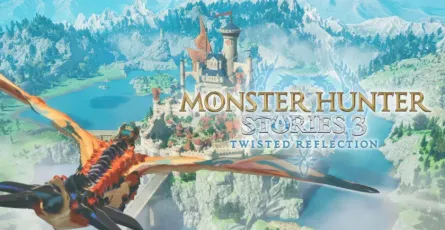
Until recently, I was more familiar with Monster Hunter through the main titles in the franchise. Most of my time has been spent hunting in World, which I still consider one of the best entries in the series. In fact, I only became interested in the spin-off Stories when the third installment was first announced. I have to admit that I was completely hooked, which made me look forward to the new game even more. But despite all that, I didn’t foresee what Twisted Reflection would bring. Ready to test your skills in battle? Download Monster Hunter Stories 3: Twisted Reflection for free and see for yourself why this game is winning over players around the world.The series has never been this serious before Paper, rock… claw? Humans and Monsters Because who needs the main storyline?! A monstrously beautiful game Can you tame a monster for the third time? Monster Hunter Stories 3: Twisted Reflection – Free Download System requirementsThe series has never been this serious before It’s worth outlining at the start what Monster Hunter Stories really is. It’s a sub-series—a sort of spin-off of the well-known Monster Hunter brand—that’s intended to be closer to the gameplay found in classic JRPGs. The main pillar—battling powerful monsters—remains in the game, but the storylines and characters have been significantly expanded, and one of the main focuses is capturing and training the beasts you encounter. Unlike the traditional Monster Hunter games, however, battles in Stories are entirely turn-based, and much of the gameplay focuses on searching for monsters, collecting their eggs, and then raising them and going on adventures with them. Before I delve into these aspects in more detail, however, let me first talk about the story. Because, for a series that in theory focuses on catching monsters, it’s surprisingly serious. Though I must honestly admit that Monster Hunter Stories 3: Twisted Reflection is a game for more patient players. The first chapter, unless you plan to rush through it, will take you anywhere from a few to over a dozen hours, during which you’ll not only learn all the gameplay mechanics but, above all, get to know the characters and the realities of the game’s world. And once you’ve more or less got everything sorted out in your head, the developers will serve you a plot twist that turns everything upside down and, at the same time, makes you realize that… this is only the beginning of the story. Our character is a young prince of the land of Azuria—or a princess, depending on your choice—and also the captain of a group of guards whose main task is to care for endangered species of monsters. This is a difficult mission in itself, and the situation isn’t helped by the fact that Azuria is on the brink of war with its neighbor, Vermeil. Of course, as you might guess, our hero and his company find themselves right in the middle of the war, though not entirely of their own volition. At the same time, this predictable plot development in Twisted Reflection is logical and very skillfully executed. You must know, however, that our protagonist is unique in yet another way. Right at the start of the adventure, we witness two legendary Rathalos hatching from a single egg, and it is the prince who becomes the rider of one of them. But what happened to the other beast, and what role does the hero’s mother play in all of this? To find out, the team will have to embark on a journey that will completely redefine the way they perceive the world they live in. Despite its classic formula, the story is engaging, moving, and manages to surprise in several places. Paper, rock… claw? Monsters take center stage here. Not only do they form the foundation of the story and the world it depicts, but they are also, by necessity, the heroes’ primary weapons. Our protagonist can have up to six creatures at a time, while the party members accompanying him have a pre-assigned monster and their own equipment. It is therefore easy to adapt our combat style depending on who we are currently traveling with—later on, we will be able to swap them out freely. The combat itself turns out to be an interesting aspect, which by definition resembles a classic game of rock, paper, scissors and… yes, in practice it’s more exciting than it sounds. Every opponent—as well as our heroes and monsters—can perform their actions in three ways: fast, strong, and technical. The entire confrontation thus boils down to taking the right actions based on what the opponent intends to do. Most often, targeting lines help with this, changing color depending on the attack being used. However, the game often surprises us with unconventional solutions. Choosing the right attack is just the beginning—weakened monsters can mutate during combat and change their strategies, often even hiding their intentions, so we must constantly demonstrate vigilance, planning, and strategy. Combat in Twisted Reflection features many interesting nuances and mechanics that make battles dynamic and keep them engaging even after hours of gameplay. We can destroy monsters’ body parts, coordinate attacks with other characters, and perform spectacular, epic attacks on the backs of beasts that would hold their own against a good anime. At the same time, the developers realized that grinding is unappealing, so they included an option to quickly finish off weaker opponents. When we are significantly higher in level than our opponent, we can end the fight with a single button press and collect all the loot. Humans and Monsters But there wouldn’t be monsters without riders. Right at the start of the adventure (with a few exceptions), we receive all the characters belonging to the Guardians’ team. Each of them has a distinct role during combat. For example, Kora is a typical tank and takes most of the damage, the youngest guard, Thea, deals massive critical damage with her bow, and the veteran Ogden boosts the team’s stats. When choosing a companion, we mainly need to consider what weapon our hero will fight with and what monsters we’ll take on the expedition—so as not to duplicate the abilities provided by a given companion. We should also take into account that not every monster can reach every location. Some fly, others only glide, and there are also beasts that climb walls or swim, allowing them to reach hidden areas. In terms of exploration and choice, the game is truly expansive and should satisfy everyone who loves to rummage, craft, and collect. Nearly every monster you slay provides new materials from which you can forge weapons or armor. These, in turn, can be further upgraded, and you can even grant them new traits or bonuses using ornaments. Here, every flower, mineral, and even insect is worth its weight in gold, and believe me—you’ll want to collect literally everything! At the same time, you’ll never feel like you’re picking something up just for the sake of grinding. Every action in the game is rewarded with experience points, so you can level up the first few monster tiers just by gathering resources. It’s a really great system. Did I mention the side quests and additional stories? Because who needs the main storyline?! Each companion has their own story arc, divided into smaller chapters—you unlock subsequent ones as you progress through the main story. These are fairly well-developed storylines that let you get to know individual party members while also unlocking new items, recipes, and even locations. That’s why it’s worth taking the time to complete these tasks as soon as they appear in your journal. The game also features plenty of side quests, which are smaller and quicker, but through them we get to know the realities of each region even better. There are also plenty of side activities and collectibles, among which it’s worth mentioning the search for colorful pigs scattered throughout the world. However, these are merely an interesting bonus for collectors. Much more interesting is the restoration of the ecosystem in a given region, which is a very important element of the gameplay. Each zone contains an optional boss. By defeating it, we unlock a camp that allows us to familiarize ourselves with the monster population in that area. And… this is where the fun really begins. If you want to have truly powerful beasts, you’ll have to collect the eggs of the right monsters, hatch them, and then release the appropriate species into the wild. This will lead to an increase in their population, possible mutations, and the emergence of new species. To put it simply: when entering a given area, we can’t encounter all species right away. Only by delving deeper into ecosystem restoration do we discover new monsters with more powerful abilities and more advanced stats. We also very quickly gain the ability to transfer genes between monsters, allowing us to achieve truly surprising combinations and results. Fortunately, the developers realized just how expansive the entire game had become, so restoring ecosystems is actually manageable and doesn’t take that much time. A monstrously beautiful game Monster Hunter Stories 3: Twisted Reflection is a monstrously beautiful game that should appeal to all anime fans. The colors here are sharp and vivid, and the animations are very expressive. Every monster attack, depending on its type, conveys a sense of power and weight. The battles look as if they were taken straight out of some Studio Ghibli films. But it’s not just the combat that’s impressive. Exploring the various locations gives you the feeling of being part of a real adventure. The world is simply alive, and I’m not just talking about cities or settlements teeming with characters. Individual biomes are filled to the brim with living beasts that give the impression of actually living by their own rhythm. The heart of Stories 3 also beats rhythmically in terms of its musical score, which perfectly complements everything happening on screen. The game’s music carries a strong emotional message and immediately evokes a sense of adventure. The soundtrack was created with a strong emphasis on orchestral melodies, which perfectly highlight the atmosphere of the depicted world and the bonds between the characters and their monsters. Also worth noting are the tracks tailored to specific biomes, which perfectly capture their character. And the locations themselves are simply gorgeous. Whether we’re traversing the main city of Azuria, a dense jungle, or vast caves and sandy deserts, we constantly feel like we’re part of an animated film. I’ll admit that the last time I felt this way was during my adventure in Ni no Kuni 2, and it’s been several years since that game’s release. The third installment of Monster Hunter Stories definitely struck a chord with my sense of aesthetics, and visually, I have absolutely no complaints. Can you tame a monster for the third time? It’s not often that a question can be easily answered. But in the case of Monster Hunter Stories 3: Twisted Reflection, the answer is simple: it’s definitely worth taming this monster, then climbing onto its back and soaring into the sky. It’s a title that practically invites you to go on adventures—and it does so amidst beautiful natural scenery. I’m convinced that Capcom will start fixing the reported technical issues after launch, and soon every rider will be able to fully enjoy the company of their mount. The third installment of Stories promised a lot, but ultimately delivers even more. It is the largest entry in the series and, at the same time, significantly more ambitious and mature. You could even say it’s Pokémon for adults, unafraid to tackle serious themes and evoke deep emotions. For JRPG fans, 2026 isn’t just making a splash—it’s roaring in with a force that’s simply impossible to ignore. Monster Hunter Stories 3: Twisted Reflection – Free Download Click the button below to start your free download of Monster Hunter Stories 3: Twisted Reflection right away. Once the download is complete, the installer will automatically guide you through the setup process on your device.Here is the link to purchase the game: Monster Hunter Stories 3: Twisted ReflectionGenre: RPG gamesSupported languages: ES/ENG/MULTiSystem requirements Minimum:OS: Windows®11 (64-bit Required)Processor: Intel® Core™ i3-9100 or AMD Ryzen™ 3 3200GMemory: 16 GB RAMGraphics: NVIDIA GeForce GTX 1660(VRAM 6GB) or AMD Radeon RX 5500 XT(VRAM 8GB)DirectX: Version 12Network: Broadband Internet connectionStorage: 50 GB available spaceAdditional Notes: SSD recommended.Recommended:OS: Windows®11 (64-bit Required)Processor: Intel® Core™ i5-10400 or AMD Ryzen™ 5 3600Memory: 16 GB RAMGraphics: NVIDIA GeForce RTX 2060 Super(VRAM 8GB) or AMD Radeon RX 5700 XT(VRAM 8GB)DirectX: Version 12Network: Broadband Internet connectionStorage: 50 GB available spaceAdditional Notes: SSD recommended.
- Henry Beaumont
- 2026/03/07
Marathon free download
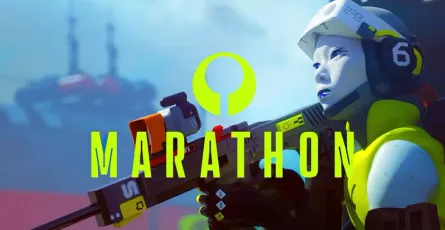
From ARC Raiders to Escape From Duckov, extraction shooters are currently enjoying a renaissance, much to the delight of FPS fans like me. However, of all the new releases in this genre, none has caught my attention more than Marathon since I first played its early alpha version over a year ago. If you've been looking for a place to download Marathon for free, you've come to the right place! Below a short review of the game, you'll find a link to download it.Bungie's style preserved A few gameplay issues PvP above all Marathon is a world-class shooter Sometimes you can get lost Hero shooter The story plays a bigger role than I expected Great technical preparation from the start Marathon system requirementsEven despite Bungie's recent poor performance, the idea of combining deathmatch with an extraction shooter always seemed great to me. This amazing concept seems to work as well as I had hoped, with absolutely excellent gameplay, interesting characters and storyline, and such addictive loot collection. It's hard to say if it will stand the test of time, but my time with the game has left me wanting more. Bungie's style preserved I've always had a hard time describing what makes Bungie's shooters so good, but whatever it is, Marathon has it. Maybe it's the deliberate musicality of the weapons, like the sharp crack of a rifle shot, the metallic sound of the trigger, or those incredible, hollow-sounding thuds when you hit your target. Maybe it's the rhythmic recoil, with pulse rifles kicking like a heartbeat and hand cannons bouncing theatrically. Maybe it's the way the world reacts to your shots, with shields crackling and crumbling and enemy NPCs staggering in place as you fill them with holes. Maybe it's invisible features, like the near-perfect tuning of bullet magnetism and refined bullet velocity, which together make you feel a little better than you actually are. A former Bungie programmer once told me that the secret to making a great shooter is to create four seconds of gameplay that feel perfect, and then repeat those four seconds as many times as possible. I don't know if that's still the guiding philosophy of the current team, but in any case, they seem to have really managed to achieve it. A few gameplay issues Given the world-class gunplay I've come to expect from Bungie, it's not surprising that some of the same flaws I associate with them have carried over into Marathon – and as usual, there are issues with geometry. From getting stuck on environmental elements that shouldn't bother me to rather unreliable climbing, I find myself once again screaming during particularly tense moments when my character fails to climb a ledge for the third time in a row and my teammates suffer an ambush without me. Overall, movement can sometimes be a bit frustrating, such as when you take serious damage from falling from a fairly moderate height and have to constantly watch the “heat” gauge (actually a stamina meter) to avoid overheating and becoming a sluggish blob for a while. In a way, these limitations are interesting obstacles to overcome, forcing the player to approach vertical environments (especially during combat) with extreme caution or to think about how much you run to prevent overheating and remain undetected by enemy troops. However, they can also be a bit annoying, especially when combined with awkward terrain that can make it difficult to collect loot and shoot smoothly. PvP above all As someone who loves PvP, one of the most refreshing aspects of Marathon is how much it deviates from the group hug energy of the PvE-friendly ARC Raiders community. Don't get me wrong, cooperating with other players can be a lot of fun, but one of the main drawbacks is that you don't get to see the thrill of PvP because it happens so rarely. In a game like Marathon, which fully showcases Bungie's legendary FPS skills, I would be quite disappointed if PvP encounters were as rare as they are in ARC Raiders, because these shootouts are undoubtedly the best part of any match. The pressure of two teams fighting in claustrophobic, dark corridors while trying to outsmart each other makes these some of the most tense encounters I've ever been a part of, and the reward of loot you get for winning these shootouts is worth the stress. Marathon is a world-class shooter A hallmark of a great extraction shooter is that “just one more round” feeling, and a big part of that comes from how fun the long-term loot-gathering gameplay is. This depends both on the incredible weapons and gadgets you can find, as well as the quest items you need to collect to unlock upgrades or complete a mission. In the first few hours of gameplay, I was completely glued to the screen, browsing through extensive menus and trees to figure out which map I needed to play on to complete this task or get that item, and then going into combat with specific goals — only to have it all go to waste when I ran into a rival gang and the bullets started flying. I'm really impressed with how fast the game progresses, and even during failed attempts, I feel like I've made at least some progress, even though I lost valuable loot along the way. Sometimes you can get lost If there's one thing that slows down this incredible progress, it's the fact that getting started is quite difficult because not much is explained. I certainly benefited from having played many extraction shooters before, as well as from the intensive courses Bungie conducted during previous introductory sessions – but even so, there are still many moments where you just have to think about the more complex systems. With a whole bunch of confusing mod slots to fill, upgrade menus that take a while to fully understand, and worst of all, very poorly explained mission objectives in the game world that are sometimes represented by a single floating icon, it takes a few hours of gameplay to master some fairly basic things. This is by no means the same level of ambiguity as in Escape From Tarkov, and some of these difficulties seem to be simply part of the DNA of extraction shooters, but I can definitely see some people giving up on Marathon because of things like this, and that's not cool. Hero shooter Marathon uses a hero shooter model, with different character classes that have built-in abilities that complement each other and appeal to different types of players, and this is an area where this shooter falls a bit short. Sure, you can become invisible or hide in a cloud of smoke as the agile Assassin, or heal and revive others as the support character Triage, but these archetypes are mostly generic characters we've seen many times before and are somewhat better represented in many other games. Don't get me wrong, they're by no means bad, and I had a lot of fun trying each one out to see which one suited me best, but compared to even existing Bungie games like Destiny, where each class has an extremely unique identity and set of interesting abilities, Marathon feels a bit disappointing. The story plays a bigger role than I expected After each mission, I would meet a new faction, hear a few short lines of dialogue, or unlock new information to read, and I became genuinely interested in learning about this world and its inhabitants. I didn't have enough time to delve into it, as it's hard to find time to read when your crewmates are waiting to start the next match, but the atmosphere of these cutscenes and the eerie cyberpunk aesthetic are extremely interesting. I want to learn more. I hope the pace of the story introduction remains just as fast and that it actually leads to some kind of plot twist, because Bungie isn't always good at that. Great technical preparation from the start I should also mention how good Marathon looks and runs. I never encountered any connection issues, frame rate drops, or any other technical problems – which is quite impressive for a pre-release version of Server Slam. Server Slam alone doesn't give the full picture, but the journey to character rank 30 was a really promising taste of the first part of the game's progression, which seems to be quite an intense climb to the end. Once Marathon is fully launched, I'll dive into every aspect of the game and come back with a final review once I've seen what the second half of this adventure looks like – part of it is hidden behind planned updates that will arrive in a few weeks. But at least for now, I feel very good about the chances of this becoming my next obsession. Click below to download Marathon for free!Here is the link to purchase the game: MarathonGenre: FPS gamesSupported languages: ES/ENG/MULTiMarathon system requirements Minimum:OS: Windows 10 64-bit (latest Service Pack)Processor: Intel Core i5-6600 / AMD Ryzen 5 2600Memory: 8 GB RAMGraphics: NVIDIA GeForce GTX 1050 Ti (4 GB) / AMD Radeon RX 5500 XT (4 GB) / Intel Arc A580 (8 GB, with ReBAR on)DirectX: Version 12Recommended:OS: Windows 10 64-bit (latest Service Pack)Processor: Intel Core i5-10400 / AMD Ryzen 5 3500Memory: 16 GB RAMGraphics: NVIDIA GeForce RTX 2060 (6 GB) / AMD Radeon RX 5700 XT (8 GB) / Intel Arc A770 (16 GB, with ReBAR on)DirectX: Version 12
- Henry Beaumont
- 2026/02/01
NiOh 3 download for free
The Nioh trilogy is coming to an end soon. Once again, Team Ninja will throw us into the heart of mystical Japan, where samurai swords will clash with yokai claws. Players can expect spectacular techniques and thrilling battles. Don't wait - download NiOh 3 for free!Team Ninja has over 30 years of experience in the industry NiOh 3 will return us to a dark version of Japan The open world offers new horizons of exploration and immersion Combat is the essence of NiOh There will be more enemies and character development, including more yokai. Multiplayer and New Game Modes When will Nioh 3 be released? NiOh 3 system requirementsTeam Ninja has over 30 years of experience in the industry The team was founded in 1995 as an internal division of Tecmo (then known as Tecmo Creative #3) and was led by Tomonobu Itagaki. Their first major success was the fast-paced, dynamic 3D fighting game Dead or Alive, which helped Tecmo survive the financially difficult period of the 1990s. Over time, the studio earned a reputation for creating challenging and ambitious games. In 1999, the team adopted the name Team Ninja and gained widespread recognition thanks to the reboot of Ninja Gaiden, one of the most spectacular and demanding action games of that era. From that moment on, Team Ninja productions have been synonymous with games that require quick reflexes and mastery of complex combat systems. The history of the Nioh series is even more interesting. The production process began in 2004, but the game did not premiere until 2017. Originally, the title functioned as a project called Oni and was supposed to be linked to an unfinished script by Akira Kurosawa. Over the years, the concept underwent several changes — at one point, NiOh was supposed to be a classic cRPG game. It was only when Team Ninja took over the entire project that NiOh began to take on its current form — a brutal action game with RPG elements, loot, and an extensive combat system. The developers have emphasized that the game was in development for over a decade and was saved only by consistently overhauling the combat system. NiOh and NiOh 2 draw inspiration from the Souls series by From Software in their design, yet they have a character all their own. The first game features aggressive combat and a stance system, setting it apart from the slow, defensive combat of the Dark Souls series. It is also set in a dark, alternative version of Japan during the Sengoku period and stars William Adams. NiOh 2 built on this formula in almost every way, allowing players to create their own hero. The developers added yokai powers, further deepening the build- and loot-based nature of the gameplay. This makes the series one of the most respected brands in challenging action-RPG games. NiOh 3 will return us to a dark version of Japan Team Ninja consistently develops the series' distinctive plot and atmosphere. Once again, we will traverse burned villages, cursed temples, and demon-infested battlefields. In the game world, historical realities blend with mythology. The developers traditionally draw on real historical figures who become part of the storyline and conflict that drive the events. Thanks to this, NiOh 3 remains a spectacular action game that pays tribute to Japanese history and culture. The new game is set in 1622 when the main character, Tokugawa Takechiyo, is about to be appointed shogun. Opposing the succession is his younger brother, Tokugawa Kunimatsu, who sinks into darkness and resorts to mysterious powers to seize power. He commands a horde of demons and starts a war that turns an era of peace into hell. Takechiyo must therefore save Japan with the help of his guardian spirit, Kusanagi. Takechiyo's journey will take him beyond the realities of the early Edo period. The story will also transport him to the Sengoku, Heian, and Bakumatsu eras, where he will encounter historical Japanese figures. He will meet Himiko and Saitō Fuku, as well as legendary warriors such as Hattori Hanzō, Honda Tadakatsu, Minamoto no Yoshitsune, Yagyū Munenori, and Takasugi Shinsaku. The open world offers new horizons of exploration and immersion Transitioning from linear levels to an open world is one of Team Ninja's most important and boldest moves in Nioh 3. Players can enjoy a much more expansive and diverse space, where each location hides unique challenges, enemies, and secrets. This openness allows for freedom in decision-making and a more natural, immersive experience of the history and atmosphere of Sengoku-period Japan, the backdrop of the entire series. PlayStation 5 and gaming PC technology enables the creation of vast, detailed areas with advanced visual effects and realistic character animation, further enhancing the quality of gameplay. Combined with a dynamic combat system and a mystical world full of yokai, Nioh 3's open world opens up completely new exploration possibilities, changing the way players experience this iconic series. Combat is the essence of NiOh This time, the studio has chosen two combat styles: samurai and ninja. Players can switch between them instantly during battles. The developers emphasize choosing your style depending on the type of opponent and the situation. You can mix them in combat or play consistently with one.The samurai style offers an experience most similar to previous installments with Ki (stamina) management and advanced weapon techniques;The ninja style focuses on speed, dodging, and ninjutsu tools. Therefore, it will be more important to dodge blows than to block them.A new defensive mechanic will allow you to parry a blow precisely by pressing the block button. Guardian spirits will return and provide powerful special attacks. This feature is combined with a new system that allows the guardian spirit to transform into a weapon, strengthening attacks and protecting the player from fatal damage. NiOh 3 is just as challenging as its predecessors. However, there will be many more systems, giving you greater freedom in character building. There will be more enemies and character development, including more yokai. Team Ninja has announced a new batch of demons, as well as an increased presence of supernatural threats in locations. Expect more frequent yokai encounters, a stronger horror tone, and a world that looks increasingly contaminated and overtaken by darkness. The series continues to focus on character development, stat management, equipment upgrades, and build creation, but NiOh 3 emphasizes these aspects even more. This means more options for strengthening your hero, more ways to customize your playstyle, and greater control over how your character grows with each stage of the adventure. Multiplayer and New Game Modes The expanded multiplayer mode is another step by Team Ninja to make Nioh 3 more appealing to a wide range of players. In Expeditions, a special cooperative mode, you can explore the vast open world with other players, face challenging opponents, and earn valuable rewards. The "Summon Visitor" mode allows you to summon other players in real time, making it easier to defeat difficult bosses and providing an opportunity to cooperate during tense moments. Integrating online solutions is important for building a community around the game and introduces a new dimension to the soulslike genre, historically associated with solitary, challenging gameplay. This type of multiplayer increases gameplay satisfaction and provides long-term value for different types of players. The Crucible, on the other hand, is a series of special arenas where extreme battles and endurance tests take place. Each arena requires maximum concentration, precision, and cunning, as opponents — including powerful yokai, demonic beings inspired by Japanese mythology — have dangerous abilities. Fighting yokai is a hallmark of the Nioh series, and the new yokai have been designed to force players to use their entire arsenal of techniques and fighting styles. When will Nioh 3 be released? NiOh 3 will debut on February 6, 2026. It has been officially announced for the PlayStation 5 and will be released on PC at the same time. No versions for the Xbox Series X/S or Nintendo Switch have been announced. You can download the game for free from our website now! Use the button below to download NiOh 3 at no cost.Here is the link to purchase the game: NiOh 3Genre: RPG gamesSupported languages: ES/ENG/MULTiNiOh 3 system requirements Minimum:OS: Windows® 11Processor: Intel Core i5-10400, AMD Ryzen 5 2600 6 cores / 12 threads or higherMemory: 16 GB RAMGraphics: NVIDIA GeForce GTX 1060 VRAM 6GB, AMD Radeon RX 5600 XT (Rev. 2.0) VRAM 6GBDirectX: Version 12Network: Broadband Internet connectionStorage: 125 GB available spaceSound Card: 48000Hz 16bit StereoRecommended:OS: Windows® 11Processor: Intel Core i5-10600K, AMD Ryzen 5 5600X 6 cores / 12 threads or higherMemory: 16 GB RAMGraphics: NVIDIA GeForce RTX 3060 Ti VRAM 8GB, AMD Radeon RX 6700 XT VRAM 12GBDirectX: Version 12Network: Broadband Internet connectionStorage: 125 GB available spaceSound Card: 48000Hz 16bit Stereo
- Henry Beaumont
- 2026/01/30
Cairn download free for PC
We reached the summit of Mount Kami, and I can safely say that the effort was worth it. Cairn is a third-person perspective (TPP) adventure-arcade game dedicated to climbing, with survival and simulation elements. It was developed by The Game Bakers, who also developed Furi and Haven. Are you looking for a thrill? You can download Cairn for free here.Story Gameplay Game modes Successful launch! Cairn system requirementsStory In the game, you play as Aava, a mountaineer trying to reach the summit with minimal health damage. First, we must plan the route and prepare the equipment. Once we set off, we must monitor our effort level and adjust our position to the conditions along the way. As is usually the case in the wilderness, not all dangers can be predicted, so sometimes you will have to improvise. The game also offers a narrative layer. On the way to the summit, we meet various characters who share their stories and make our rest breaks more enjoyable. "Manage your resources — hooks, chalk, and finger tape, as well as food, water, and medicine — to survive the long climb. Set up camps and explore the mountain to find the resources you need to reach the summit," reads the Cairn description. Gameplay In Cairn, the action is seen from a third-person perspective. During the climb, we have complete freedom to choose our path. At the foot of each wall, we must carefully examine it to plan our ascent, considering the rock formations and our own skills and equipment. The game gives us full control over our character's movements, allowing us to smoothly control their arms and legs. Thanks to this, we can always find the best, most stable holds. Additionally, to avoid falling, we must choose the right posture, maintain balance, and monitor the effort indicator. Of course, Aava and Marco can climb using more than just their limbs. They have equipment to help them reach the summit, such as hooks driven into the wall. It's worth remembering these because if we lose our grip, they may be our last resort. They also have chalk and special tapes for wrapping our fingers, which makes it easier to hold on to the rocks. Additionally, the game incorporates survival elements: we can regenerate our strength by camping, our characters must eat and drink during the climb, and they can use medicine to treat ailments. Game modes In addition to the Story Mode, in which we play as Aava, Cairn offers Expedition Mode. In Expedition mode, we can take control of Marco and conquer other peaks. First, we choose our climbing style (alpine or free solo) and the challenges we want to take on. Then, we can compare our achievements with the results of other players. Successful launch! One day after its release, the game has received positive reviews and high player activity. Over the past 24 hours, more than 9,500 users have played simultaneously, which is considered a success for such an unassuming title. Players appreciate Cairn for how it combines challenging mechanics and a high level of difficulty with a relaxing, even meditative, atmosphere. This is all thanks to the soundtrack and picturesque landscapes that make climbing more enjoyable. "The gameplay is challenging and intense, and the survival and resource management mechanics are addictive. It's one of the few games where I enjoyed delving into the story fragments discovered in documents scattered around the map," writes one player. Click below to start the free download of Cairn.Here is the link to purchase the game: CairnGenre: Adventure gamesSupported languages: ES/ENG/MULTiCairn system requirements Minimum:OS: Windows 10Processor: Intel Core i7-6700 (4 * 3400), AMD Ryzen 5 1500X (4 * 3500) or equivalentMemory: 8 GB RAMGraphics: GeForce GTX 1050 Ti (4096 MB), Radeon RX 570 (8192 MB)Storage: 10 GB available spaceRecommended:OS: Windows 10Processor: Intel Core i7-10700 (8 * 2900), AMD Ryzen 7 3700X (8 * 3600) or equivalentMemory: 8 GB RAMGraphics: Geforce RTX 2060 Super (6144 MB), Radeon RX 5700 (8192 MB)Storage: 10 GB available space
- Henry Beaumont
- 2026/01/18
Pathologic 3 for free
In Pathologic 3, folk wisdom clashes with a scientific approach. The lives of ordinary people clash with dreams of utopia. The player's determination collides with successive obstacles maliciously thrown in their path by the developers. Would you like to experience the game for yourself? Download Pathologic 3 now!I call this intellectual survival It's not easy What was the author thinking? Who is Pathologic 3 for? Summary and rating Pathologic 3 system requirementsPathologic 2 is my favorite game. It was such a wildly successful remake of the original that my expectations for the third installment became a source of anxiety. Ice-Pick Lodge, the Russian studio that moved to Kazakhstan after the invasion of Ukraine and condemned Vladimir Putin's actions, has no shortage of incredibly talented people. However, the bar was set so high that they might not be able to meet it. After the company ended its cooperation with its founder, doubts arose as to whether the artistic success of Pathologic 2 could be repeated. Well, it was—and then some! Pathologic 3 is another remake of one of the paths from the first part of the series. Once again, we find ourselves in a fictional Russian-inspired country and equally fictional times, most likely the late 19th or early 20th century. This time, we see the world through the eyes of Danil Dankovsky, a doctor who dreams of defeating death. This desire draws him to a nameless town in the eastern steppes where an exceptionally long-lived man named Simon Kain is said to live. Unfortunately for Dankovsky, Kain dies on the day he arrives, and an extremely dangerous epidemic breaks out in the city. The player must perform medical duties and also become a politician, detective, judge, errand boy, and time traveler. Good luck! It's hard to say unequivocally what genre Pathologic 3 belongs to, but it's probably closest to an RPG with mechanics similar to those of simulators. We diagnose patients and manage the city using special menus and by issuing decrees. Most often, however, we run from one character to another (sometimes traversing dangerous neighborhoods) to tell them something or ask them for something. Although there are elements of combat, they are not the main focus. The real battle does not take place in the infected or rebellious parts of the town, but within ourselves. I call this intellectual survival I call the key challenge offered by Pathologic 3 "intellectual survival." Its nature is twofold. First, it refers to the protagonist. Second, it refers to the player themselves. Let's start with the former and take a quick look at the game mechanics (because it's impossible to discuss them all). In Pathologic 2, the main character, Artemii Burakh, was primarily concerned with what he would eat and drink and where he would spend the night. Controlling him was survival—perhaps not classic, but comparable. Dankowski, on the other hand, is a character with his head in the clouds. Physical needs are irrelevant to him — he teeters on the brink of mania and apathy. It is Dankowski's mental health that we must take care of if we want to succeed in the game. Various substances and elements of the environment will help us do so. Digging through trash cans or swinging on a swing to avoid dangerous mental states is part of exploring the city. Illness is not as deadly to Dankowski as his own restless mind. This technique deepens immersion, allowing us to view the game world differently than Burakh did. However, players also experience intellectual survival because dialogue in the Pathologic series is equivalent to combat in action-focused titles. Selecting the incorrect response can abruptly conclude an essential quest line or initiate one that is best avoided. In the third part, specific statements increase our character's mania or apathy. Therefore, if we don't have any healing substances with us, we should think twice before choosing an answer. However, this is purely a gameplay issue. Survival also applies to our gray cells when we try to understand what someone is saying. The script is unusually high-quality, but that doesn't mean the story is easy to follow. In the world of Pathologic, everyone is a doctor of philosophy who communicates exclusively through mystical riddles. Don't expect dialogue straight out of popular cinema that imitates how people really talk. Instead, prepare yourself for the experience of reading a novel by a renowned epic writer such as Fyodor Dostoyevsky. Some will find this jarring, but it is a deliberate technique. The creators are playing with video game conventions, especially those found in big-budget titles, and with players accustomed to them. It's not easy Although the challenge may not seem as great as in the previous two installments, Pathologic 3 is undoubtedly not a relaxing game. There is no shortage of difficult and uncomfortable decisions, and the mechanics that are supposed to make life easier often turn against you. Time travel is the perfect example of this, as it is practically Danil's daily bread. As newcomers to the series, we gain the ability to jump through the timeline and repeat days at will. This allows us to make different decisions and make up for what we missed. When our choices turn out to have changed the future for the worse, all we have to do is go back and reverse everything — nothing could be simpler, right? Wrong. First, the butterfly effect and the network of connections between events are so complicated that they can give you a headache despite the interface's attempts to explain them clearly. Second, the player feels helpless when a decision cannot be reversed. The developers use every means possible to laugh in our faces and hurt us. Pathologic 3 doesn't care if the player is having fun. In fact, it sometimes seems to want us to suffer. That's the charm of this production. It's not an escapist toy but an intellectual challenge. It's a game that forces you to think about the nature of games as an art form and about worldview issues that clearly form the basis of the presented story. What was the author thinking? In Pathologic 3, we see many conflicts. The most obvious ones are political and cultural disputes. The town is de facto ruled by three wealthy families who will not miss any opportunity to harm each other. The latter result from the presence of the steppe people, a group with a different culture, language, and beliefs, clearly inspired by the Siberian Buryats. This community perceives reality completely differently, and its customs trigger various clashes, which are exacerbated by the epidemiological situation. Of the many wars of ideas, the most significant appear to stem from the age-old conflict between intellect and transhumanist tendencies, and mundanity and the natural order. Dankowski firmly sides with the former, closing himself off in the process. He dreams of a utopia without death or disease and despises the steppe dwellers who worship nature. Although we see the world through the eyes of a man with clearly defined views, the dispute is presented as unresolvable, leaving us to draw our own conclusions. Yes, it's complicated, but that's how it's supposed to be. The themes of Pathologic 3 are universal, woven seamlessly into the plot, and the message is not intrusive. Those who want to dig deeper can do so, but those who don't can go through the entire game without thinking about the hidden metaphors. On both levels, Pathologic 3 simply works. Who is Pathologic 3 for? I won't pretend that it's a game for everyone. In fact, many people reject the complex dialogue and other oddities that are characteristic of the series. However, those who want an intellectual challenge and are curious about the potential of games as a medium should at least give it a try. Incidentally, I can't imagine a better opportunity to get into the entire Pathologic series. In terms of gameplay, Pathologic 3 is the most accessible game released so far. But will veterans of previous installments find something for themselves here? Absolutely. The game is full of references and meta-comments about the second and first installments, but it also has many new storylines. It's a different game with innovative solutions and mechanics, yet it maintains the series' spirit, boasting the same finesse and artistic flair. Despite my enthusiasm for the game, I have one complaint: in the final stages, it's easy to encounter bugs, some of which are more serious than others. This is probably because most players haven't gotten that far yet. However, the developers are patching the game quickly, so I expect the fixes will be here soon. Summary and rating Pathologic 3 is a wonderfully designed, thought-provoking production that experiments with its own form. The narrative and gameplay form a coherent whole, offering an experience that is fundamentally different yet similar to previous installments in the series. My rating for the game is 9.5/10. Pros:phenomenal storylinewell-thought-out gameplay designatmospheric soundtrackoriginalityaccessible to new fans while catering to old-timersCons:there are bugs, especially towards the end of the adventurelong loading screensClick below to download the full version of Pathologic 3 for free.Here is the link to purchase the game: Pathologic 3Genre: RPG gamesSupported languages: ES/ENG/MULTiPathologic 3 system requirements Minimum:OS: Windows 7/8/10/11 (64-bit)Processor: i3 / Ryzen 5Memory: 8 GB RAMGraphics: NVIDIA GeForce GTX 960DirectX: Version 11Storage: 25 GB available spaceRecommended:OS: Windows 7/8/10 (64-bit)Processor: i7 / Ryzen 7Memory: 16 GB RAMGraphics: NVIDIA GeForce GTX 2070DirectX: Version 11Storage: 25 GB available space
- Henry Beaumont
- 2026/01/04
ARK: Survival Evolved free download
At first glance, ARK: Survival Evolved seems like an unusual game. The survival adventure genre is certainly not as popular as action games. Developed by the American studio Wildcard, the game also offers a multiplayer mode in which our character is threatened by dangerous animals and other players. You can download Ark: Survival Evolved for free here.Digital dinosaurs Let's go, mammoth! Strength in numbers! No fun without resources! With a hoe for tomatoes Waiting for Offspring ARK: Survival Evolved requirementsFighting to the death in this world adds flavor to the whole experience. The developers asked, "What if...?" and created a location where we encounter animals that never had a chance to coexist in reality. In the battle for survival, we hunt dinosaurs and Ice Age megafauna. ARK: Survival Evolved primarily focuses on human survival and creating an increasingly advanced human community. Here, in addition to fighting for our lives, we also fight for our heritage—technology, tribe, and settlement. These components form a potential mini-civilization in ARK: Survival Evolved. Digital dinosaurs Before conquering the world, it would be wise to learn what kind of fauna we will encounter. The animals we encounter are often not real species but variations of real ones created by the developers. This is the case with the various dinosaurs we see from the beginning of the game. We usually imagine dinosaurs as huge, bloodthirsty lizards. In ARK: Survival Evolved, however, we encounter both herbivorous and carnivorous species that move on two or four limbs and come in various sizes. There are predatory raptors, peaceful brontosaurs, and curious compsognathus. Just like in reality, the dinosaurs in the game have taken over almost every niche. Analysis of fossils shows that some were capable of gliding and others led semi-aquatic lifestyles. The beginning of the dinosaur era is associated with a mass extinction event on Earth. The Permian extinction, which occurred approximately 245 to 250 million years ago, wiped out over 90% of life on Earth. Dinosaur ancestors are believed to have first appeared 230 million years ago as small, bipedal reptiles that gradually evolved to dominate the fauna of all continents. Dinosaur hegemony, which lasted throughout the Jurassic and Cretaceous periods, ended with their extinction. Sixty-six million years ago, the Cretaceous extinction occurred, eliminating at least 75% of the animal species that existed at that time. It is widely accepted that this extinction event was caused by a meteorite impact. Among the survivors were the reptilian ancestors of today's birds. Let's go, mammoth! In ARK: Survival Evolved, we can domesticate various animal species encountered during the game. These pets can include diplodocuses, horses, scorpions, vultures, and mammoths. However, the domestication process is not easy. It requires patience, resources, and time. Having your own breeding stock is practical — animals help players survive. We control our charges using commands, and they assist in farming and gathering resources. Some can be used for transport, scouting, and combat. Of course, such animals must be tamed. There are several ways to domesticate animals. Some species must be stunned and then fed. Another method is to tame them by feeding them without using violence. Some animals, on the other hand, must be saddled after being stunned. The effectiveness of the taming process depends on the food we feed our future pet, among other things. As we learned in history class, many species have been domesticated in different parts of the world. This lengthy process occurred alongside the gradual transition of humans from a nomadic to a sedentary lifestyle. Today, animals serve many purposes, such as providing food and raw materials, performing work such as transport, hunting, and service, and serving as decorations and sources of entertainment, such as horse racing. Strength in numbers! It's hard to imagine how humanity would have developed if our ancestors hadn't cooperated with each other. Surviving alone, especially when armed only with a spear, can be problematic if we have no one to support us in defeating a predatory opponent. The same is true in ARK: Survival Evolved, but the developers anticipated this problem and implemented the ability to create your own tribe. By uniting in a tribe, group members can pursue a common goal, such as building and defending a settlement or hunting. An additional advantage is that performing various activities in the presence of a fellow tribesman results in bonus experience points, accelerating advancement to the next level. Depending on the group's arrangements, your pet can become the tribe's property and remain there even if you leave. Otherwise, tribe members can give it commands. We solve the issue of property brought to the community similarly — it can be communal or private. In the struggle for survival in the wilderness, alliances or wars with other tribes often form. In such conditions, conflict is likely, especially when resources are scarce and we know our neighbors have an abundance of them. This is not surprising; we know of similar cases of intertribal conflict throughout history. These conflicts were often bloody. No fun without resources! As we progress in the game, we unlock new engrams, or patterns for crafting items. These include weapons, clothing, and architectural elements. Each invention requires obtaining the right amount of resources, such as wood, stone, or plant fibers. After collecting the materials, we begin crafting the item, a process that can sometimes be quite time-consuming. Engrams may seem arranged chronologically according to the order in which a given item was invented by humanity. However, our character can quickly learn the pattern for a blood transfusion syringe bag while using only a slingshot for defense. Despite the lack of reference to actual chronology, ARK: Survival Evolved addresses the issue of human development at an accelerated pace. Above all, it illustrates how problematic the availability of raw materials can be. Conflict with a tribe hindering our acquisition of materials can limit our group's technological development and leave us defenseless. Such situations are also familiar to us from history. For example, consider the crisis in the eastern Mediterranean basin that took place at the turn of the 13th and 12th centuries BCE. The Hittite Empire collapsed at that time, most likely due to the Sea Peoples seizing trade routes, which led to famine and internal destabilization. The interruption of supplies to Mycenaean Greece, including copper and tin used to produce bronze for military purposes, led to devastating internal conflicts over raw materials. The Dorian invasions sealed the fall of Mycenaean culture. With a hoe for tomatoes Without food, we cannot survive in ARK: Survival Evolved. To survive, it is important to obtain food from several sources. In addition to hunting wild animals, we can devote ourselves to gathering and working the land. To create your own plot, you need to find plant seeds. Then, place the seeds in boxes designed for this purpose. Use fertilizers made in composters to stimulate plant growth. You can use manure as well, but it will not be as effective. There are three ways to provide water to plants: watering them directly, irrigating them using an irrigation system, and through rainfall and snowfall. Once the conditions are right, we can build a greenhouse where our seedlings will grow faster with less fertilizer. The culmination of our efforts is the harvest, which we begin after a certain period of time. The gradual transition from a hunter-gatherer economy to an agricultural economy is known as the Neolithic Revolution. This process developed independently in different parts of the globe, but it is usually associated with the Fertile Crescent in the Middle East. The beginnings of agriculture date back to around 10,000 BCE. The increased food supply led to population growth and, consequently, the emergence of civilization. Waiting for Offspring The result of our interference in the world of ARK: Survival Evolved is the reproduction of selected domesticated individuals. If they are kept in a confined area or walked together, our pets may become interested in each other. Depending on the species, mating will result in either an egg or pregnancy in the female. As in reality, the right air temperature is essential for the development of the baby dinosaur. Without warmth, our efforts to breed a small dinosaur may be unsuccessful. In the case of a pregnant female, we must ensure that she has enough food — after all, she is eating for two. When the baby is born, it must be accepted into the herd. It requires a lot of food and constant care, especially in the early stages. If we don't prepare supplies in advance, we may be in for a big surprise, as litters can have up to three babies. As in real life, selecting the best individuals brings us closer to achieving the desired characteristics in our herd. If we pay attention to the baby as it grows and feed it the right food, its initial stats may improve. Importantly, young animals may be affected by a mutation, which can affect their potential or appearance. Click below to start downloading ARK: Survival Evolved for free.Here is the link to purchase the game: ARK: Survival EvolvedGenre: Action GamesSupported languages: ES/ENG/MULTiARK: Survival Evolved requirements Minimum:OS: Windows 7/8.1/10 (64-bit versions)Processor: Intel Core i5-2400/AMD FX-8320 or betterMemory: 8 GB RAMGraphics: NVIDIA GTX 670 2GB/AMD Radeon HD 7870 2GB or betterDirectX: Version 10Storage: 60 GB available space